Table of Contents
ToggleLaunching a new e-commerce product is no longer just about publishing a product page and running a few ads. Brands now need a steady stream of video content for social media, paid campaigns, landing pages, marketplaces, email, and product education.
The challenge is that all of these videos need to feel connected. The product should look the same, the messaging should stay clear, and the campaign should move quickly from concept to launch without creating a different production process for every asset.
AI video workflows are helping e-commerce teams handle this more efficiently. Instead of treating scripting, visuals, editing, and campaign variations as separate tasks, brands can build a connected workflow that moves from the first idea to a complete set of launch-ready videos.
Why Video Matters So Much During a Product Launch
Video helps customers understand a product faster than static images alone.
A launch video can show:
- How the product looks in use
- What problem does it solve
- How it fits into a customer’s routine
- Important features and benefits
- Different use cases
- Product details that are difficult to explain with text
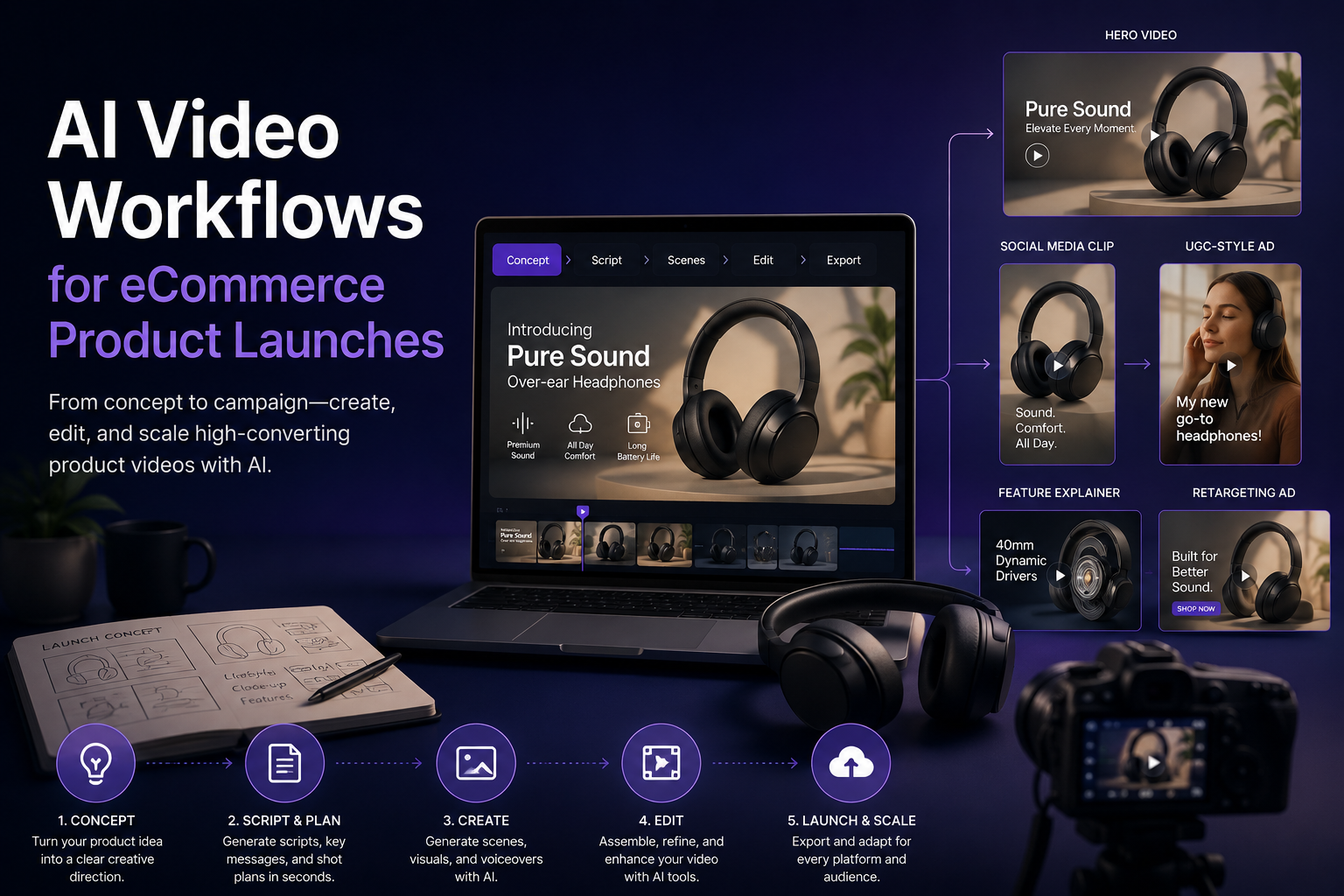
For e-commerce brands, one video is rarely enough. A campaign may need a hero product video, short social clips, UGC-style ads, feature explainers, retargeting creatives, and platform-specific versions.
That is where AI becomes useful. It can reduce the amount of repetitive production work while helping teams create more variations from the same core campaign idea.
Turning a Product Brief Into a Creative Direction
Every strong launch starts with a clear brief.
The brief should define the product, audience, positioning, key benefits, visual tone, and campaign goals. AI can then help turn that information into creative concepts, scripts, and scene ideas.
For example, a skincare launch might focus on clean visuals, close-up product shots, soft lighting, and lifestyle scenes. A tech product may need sharper lighting, fast camera movement, and a more modern visual style.
The important part is keeping the creative direction consistent before producing individual videos.
This is where invideo Agent fits naturally into e-commerce launch workflows. It can help take a product idea, brief, or campaign concept and develop it across scripting, planning, visual development, generation, editing, and post-production, so the campaign is built as one connected project rather than a collection of unrelated clips.
Keeping the Product Consistent Across Multiple Videos
Product consistency is one of the biggest challenges in AI-generated advertising.
If the packaging, color, logo placement, size, or shape changes from one scene to another, the video can quickly lose credibility.
Brands should maintain clear product references throughout production, including:
- Front and side views
- Packaging details
- Brand colors
- Logo placement
- Material and texture
- Product dimensions
- Important visual features
Using the same references across different scenes helps create a stronger visual connection between campaign assets.
For launch campaigns with many videos, invideo Agent Two can extend this workflow through project memory and specialized creative agents, helping teams carry decisions around product appearance, campaign style, lighting, and visual direction across a larger set of scenes and assets.
Building Different Videos Around the Same Campaign Idea
An e-commerce launch often needs several creative formats, but they should still feel like part of the same campaign.
A single product concept can be adapted into:
Hero Product Videos
These are polished videos used on landing pages, product pages, and campaign launches. They usually focus on product design, key benefits, and brand positioning.
UGC-Style Ads
These videos use a more casual, creator-led approach. They may focus on personal experiences, demonstrations, or product reactions.
Feature Explainers
Short videos can highlight specific features, benefits, or product differences.
Social Media Clips
The same campaign can be adapted into short vertical videos for TikTok, Instagram Reels, and YouTube Shorts.
Retargeting Ads
These creatives can focus on objections, reviews, offers, or specific product benefits for people who have already shown interest.
AI makes it easier to create these variations without starting from scratch each time.
Using AI to Explore Product Visuals Before Production
Before creating final campaign assets, brands can use AI to test different visual directions.
This may include:
- Background styles
- Lighting setups
- Product placement
- Camera angles
- Lifestyle environments
- Model or character choices
These early visual tests can help teams decide what works before committing to final production.
For example, a brand may test whether a product looks better in a clean studio environment or a lifestyle setting. AI-generated concepts can make that decision easier before the full campaign is built.
Creating Stronger Product Demonstrations
Product demonstrations are especially important for e-commerce because customers cannot physically interact with the item before buying.
A good demonstration should make the product easy to understand.
AI-assisted video workflows can help create scenes that show:
- How the product is used
- How it moves or functions
- Before-and-after situations
- Different features
- Real-world use cases
The goal is not simply to make the product look attractive. The video should answer the questions a potential customer may have before purchasing.
Maintaining a Consistent Brand Look
A launch campaign should feel recognizable across every video.
That means maintaining consistency in:
- Color palette
- Typography
- Lighting style
- Camera language
- Music
- Editing pace
- Product presentation
Without this consistency, a campaign can feel fragmented even if the individual videos look good.
AI can help repeat these creative choices across multiple assets, but teams still need to define the visual rules clearly at the start.
Creating Campaign Variations for Testing
Performance marketing depends heavily on testing.
Brands often need several versions of the same ad with different:
- Hooks
- Headlines
- Opening scenes
- Calls to action
- Product benefits
- Audiences
AI makes it easier to produce these variations quickly.
For example, one product video may focus on convenience, while another focuses on quality. The visuals and product identity can remain consistent while the message changes.
This allows marketing teams to test different approaches without producing an entirely new campaign every time.
Adapting Videos for Different Platforms
A video that works well on a product page may not work the same way on TikTok or Instagram.
Different platforms require different pacing, framing, and formats.
A complete AI video workflow should make it easier to adapt content into:
- 9:16 vertical videos
- 1:1 square ads
- 16:9 landscape videos
- Short-form social clips
- Longer product explainers
The core campaign remains the same, but the format changes depending on where the video will be published.
Adding Voice, Music, and Sound to Product Videos
Audio plays an important role in how a product video feels.
A luxury product may need slower music and softer sound design, while a fitness product may work better with faster pacing and more energetic audio.
Voiceovers can also help explain key features or guide viewers through a demonstration.
When these elements are created as part of the same workflow, it becomes easier to maintain a consistent campaign tone across multiple assets.
Why Connected Workflows Matter More Than Individual AI Tools
Using several AI tools can be useful, but moving between disconnected platforms can create new problems.
Teams may need to transfer files manually, repeat creative instructions, or rebuild context every time they move to another tool.
Connected workflows reduce this friction by keeping the campaign structure, references, and creative direction in one place.
This is particularly useful for e-commerce launches where teams may need to produce many videos quickly while keeping the product and brand identity consistent.
Where Human Creative Direction Still Matters
AI can speed up production, but it does not replace creative judgment.
Teams still need to decide:
- Which product benefit matters most
- What the audience should feel
- Which scenes support the campaign
- How the product should be positioned
- What makes the creative different from competitors
AI is most useful when it helps teams execute these decisions faster.
The creative idea still needs to come from a clear understanding of the product and customer.
Final Thoughts
AI video workflows are making e-commerce product launches more flexible and scalable.
Instead of producing one video at a time, brands can build a complete campaign around a shared product brief, visual direction, and messaging strategy.
From concept development and product visualization to UGC ads, social clips, feature explainers, and retargeting creatives, AI can help teams create more content without losing consistency.
The strongest workflows are the ones that connect every stage of production. When the product, visual style, messaging, and campaign direction stay aligned from the first concept to the final video, e-commerce brands can launch faster while creating a more consistent customer experience.