Table of Contents
ToggleOutdoor content has always depended on timing, location, weather, and access. A fishing trip, hiking route, camping setup, or product test can take hours to film, yet the final video may only use a small part of that footage. For creators, the challenge is not just capturing the experience. It is turning it into a clear, engaging story that works across different platforms.
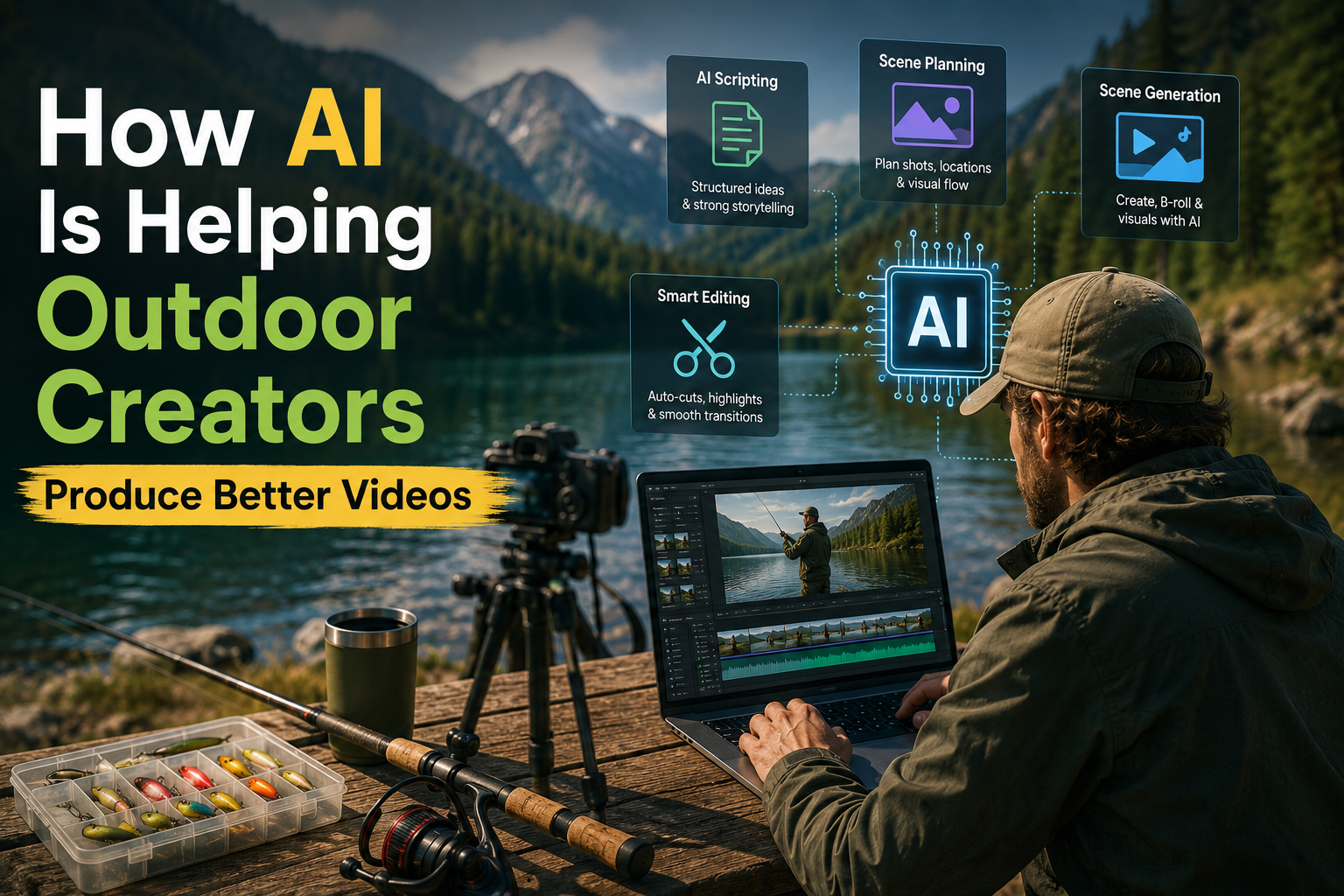
AI is helping simplify that process. Instead of replacing the creator behind the camera, it can support the work that happens before and after filming, such as writing scripts, planning scenes, organizing footage, editing, and creating different versions of the same video for social media.
For outdoor creators, this means spending less time on repetitive production tasks and more time actually creating useful, entertaining content.
Why Outdoor Video Production Can Be Difficult
Outdoor filming is less predictable than studio production. Light changes quickly, weather can shift, background noise is difficult to control, and some moments only happen once.
A creator filming a fishing tutorial, for example, may need to capture:
- The setup before the cast
- Close-ups of the reel and lure
- Wide shots of the location
- The actual catch
- Commentary or explanation
- Product details
- Supporting B-roll
Organizing all of this into one smooth video takes planning. AI can help make that process more structured, especially for creators who work alone or with a small team.
AI-Assisted Scripting Makes Videos Easier to Follow
Not every outdoor video needs a full script, but having a clear structure helps.
AI can help creators organize ideas into:
- Strong openings
- Key talking points
- Product explanations
- Tutorial sections
- Calls to action
- Short-form hooks
For example, a creator making a video about choosing a baitcasting reel could provide the main topic, audience, and key features they want to discuss. AI can help turn those notes into a cleaner outline or script without removing the creator’s own voice.
This is especially useful when the video needs to educate viewers while still feeling natural.
Planning Scenes Before Filming Saves Time
Good outdoor videos often look spontaneous, but the strongest ones usually have some level of planning behind them.
AI can help creators think through the visual side of a video before filming starts. That can include deciding where close-ups are needed, which moments deserve wide shots, and what supporting footage will help explain the story.
For creators building more complete workflows, invideo Agent can support scripting, planning, visual development, scene generation, editing, and post-production within the same project. This can be useful when a creator wants to take a rough idea and develop it into a more structured video without handling every production stage separately.
For larger or repeated content projects, invideo Agent Two extends this approach with project memory and specialized creative agents, helping creators keep decisions around style, scenes, and visual direction connected across multiple videos.
AI Can Fill Visual Gaps When Footage Is Missing
Outdoor creators do not always capture every shot they need.
A camera may miss an important moment, weather may prevent a reshoot, or a creator may need additional visuals to explain something that was not filmed on location.
AI-generated visuals can help fill some of these gaps.
This can include:
- Establishing shots
- Product-focused scenes
- Stylized transitions
- Visual explanations
- Background footage
- Concept shots
The goal is not to replace authentic footage. Instead, AI-generated cinematic shots can support the story when real footage is unavailable or when a creator wants to add a more polished visual element.
Editing Is Becoming Faster and More Flexible
Editing is often one of the most time-consuming parts of outdoor content creation.
A long fishing trip, hike, or camping video may produce hours of footage. Finding the useful moments, arranging them into a story, balancing audio, and cutting repetitive sections take time.
AI-assisted editing can help with tasks such as:
- Finding key moments
- Creating rough cuts
- Removing long pauses
- Generating captions
- Cleaning up audio
- Suggesting shorter versions
- Organizing clips by topic
This allows creators to focus more on pacing and storytelling rather than spending all of their time sorting footage.
Better Audio Can Make Outdoor Videos Feel More Professional
Outdoor audio is difficult to control.
Wind, water, traffic, insects, and background conversations can make recorded dialogue hard to hear. Even a visually strong video can feel low quality when the audio is unclear.
AI audio tools can help improve:
- Speech clarity
- Background noise reduction
- Voice consistency
- Captions and transcripts
- Voiceovers
Creators can also add narration after filming when it is difficult to explain something clearly on location.
This is useful for tutorials, gear reviews, and educational outdoor videos where the information needs to be easy to understand.
Product Videos Benefit From AI-Assisted Visual Planning
Outdoor creators often work with fishing gear, clothing, camping equipment, cameras, accessories, and other products.
A good product video needs more than a person holding the item in front of the camera. Viewers want to see how it works in a real setting.
AI can help creators plan a mix of:
- Product close-ups
- Real-world demonstrations
- Detail shots
- Comparison scenes
- Lifestyle footage
- Short promotional edits
For example, a reel review could combine close-up footage of the reel, casting shots, on-water use, and short visual explanations of important features.
Better planning helps the product feel naturally integrated into the content rather than turning the video into a traditional advertisement.
One Video Can Become Content for Multiple Platforms
Outdoor creators rarely publish on only one platform.
A long YouTube video may also need to become:
- Instagram Reels
- TikTok videos
- YouTube Shorts
- Facebook clips
- Product page videos
Creating every version manually can take almost as much time as producing the original video.
AI can help identify useful moments from longer footage and adapt them into shorter formats. It can also help rewrite captions, adjust pacing, and create different hooks for each platform.
With connected video workflows such as invideo Agent, creators can develop and refine videos while adapting the same idea for different formats instead of rebuilding each version from the beginning.
AI Helps Creators Stay Consistent Across a Content Series
Consistency matters when a creator publishes regularly.
Viewers begin to recognize recurring elements such as:
- Editing style
- Intro structure
- Music
- Camera style
- Product presentation
- Color treatment
AI can help creators maintain these choices across a series of videos.
This is particularly useful for recurring content such as weekly fishing reports, gear reviews, trip videos, or tutorial series.
Maintaining a familiar style helps content feel more connected and gives the channel a clearer identity.
AI Can Support Storytelling Without Making Videos Feel Artificial
The strongest outdoor content still depends on real experiences.
Viewers want to see genuine locations, real catches, actual product use, and honest reactions. AI works best when it supports those experiences rather than replacing them.
A creator can use AI to structure the story, clean up the edit, generate supporting visuals, or adapt the content for different platforms while keeping the core footage authentic.
This balance is important because outdoor content is often built around trust.
Where Human Creativity Still Matters Most
AI can make production faster, but it cannot decide what makes an experience meaningful.
Creators still need to understand:
- What their audience cares about
- Which moments are worth showing
- When to explain something
- When to let the visuals speak
- How to keep the video authentic
A fishing creator, for example, understands the difference between a technically correct explanation and advice that actually helps someone on the water.
AI can support the production process, but the knowledge, personality, and experience still come from the creator.
Final Thoughts
AI is making outdoor video production more manageable by helping creators with scripting, planning, editing, visual generation, audio cleanup, and content adaptation.
For creators who film in unpredictable environments, these tools can reduce the amount of repetitive work that happens around the actual shoot.
The biggest advantage is not simply creating videos faster. It is having more time to focus on the experience, the story, and the information viewers came to see.
As AI video workflows continue to improve, outdoor creators will have more ways to turn raw footage and ideas into polished content without losing the authenticity that makes outdoor videos worth watching.