
Table of Contents
ToggleKitsap County’s damp climate and dense wooded areas create ideal conditions for pests year-round. From carpenter ants chewing through structural lumber to rodents nesting in crawl spaces, homeowners here face pest challenges that differ from drier regions. Understanding which problems you can tackle yourself and when to bring in a licensed professional makes the difference between a minor nuisance and costly structural damage. This guide walks through common pest issues in the region, practical prevention strategies, and what to expect when hiring professional services.
Key Takeaways
- Kitsap pest control problems stem from the region’s damp climate and dense woods, where moisture ants, carpenter ants, and rodents thrive year-round and threaten structural integrity.
- Call a professional pest control operator when facing structural pests like carpenter ants, multiple rodent entry points, repeat infestations, or health hazards such as hantavirus contamination.
- Verify Washington State licensing and request a detailed property inspection before hiring pest control services; reputable companies use integrated pest management to address root causes rather than symptoms.
- Aggressive moisture management is critical for Kitsap homeowners—extend downspouts 6 feet, grade soil away from foundations, and install vapor barriers in crawl spaces to prevent pest activity.
- Seal foundation gaps wider than 1/8 inch, trim vegetation 12 inches from the foundation, and use copper mesh for rodent exclusion; these preventive measures reduce the need for costly reactive treatments.
- Quarterly pest control services in Kitsap range from $75–$150 per visit, while one-time treatments cost $150–$1,200 depending on severity; bundling services typically saves 15–25% compared to individual bookings.
Understanding Common Pest Problems in Kitsap County
The Pacific Northwest’s wet winters and mild summers create a pest paradise. Moisture ants thrive in damp wood and soil, often indicating water damage or poor drainage around foundation perimeters. Unlike carpenter ants, they don’t eat wood but nest in it, a sign you’ve got bigger moisture problems to address.
Carpenter ants are the structural threat. They excavate galleries in softened lumber, particularly in rim joists, sill plates, and window headers exposed to moisture. Look for frass (sawdust-like debris) near baseboards or windowsills. An established colony can compromise framing members over time.
Rodents, both Norway rats and deer mice, seek shelter in attics, crawl spaces, and wall cavities when temperatures drop. They chew through electrical wiring (a fire hazard), insulation, and even PEX plumbing lines. Droppings, gnaw marks on dimensional lumber, and scratching sounds in walls signal active infestations.
Spiders are abundant, with hobo spiders and giant house spiders common indoors. While most are harmless, black widows occasionally appear in woodpiles and garages. Frequent pest activity often indicates an underlying issue, addressing moisture, entry points, and sanitation reduces their presence more effectively than repeated treatments.
When to Call a Professional vs. DIY Pest Control
Surface-level problems often respond to DIY methods. Ant trails on countertops or occasional spiders in basements can be managed with bait stations, caulking entry cracks, and eliminating moisture sources. If you’re seeing fewer than a dozen pests weekly in isolated areas, start with exclusion and sanitation.
Call a licensed pest control operator when:
- Structural pests (carpenter ants, termites, wood-boring beetles) are present. These require targeted treatments and moisture remediation that go beyond surface sprays.
- Rodent infestations involve multiple entry points, active nesting, or contamination in wall cavities. Professional exclusion work includes sealing gaps with copper mesh, installing vent screens, and strategically placing tamper-resistant bait stations where DIY traps can’t reach.
- Repeat infestations occur even though your efforts. Persistent problems often indicate hidden harborage areas, sub-floor voids, attic eaves, or exterior drainage issues, that require professional inspection.
- Health risks are involved. Rodent droppings can carry hantavirus: bed bugs require heat treatment or fumigation: wasp nests near entryways need safe removal with proper PPE and equipment.
When consulting local pest control services, look for companies offering integrated pest management (IPM), a strategy combining inspection, exclusion, sanitation, and targeted treatment rather than blanket pesticide application. This approach addresses root causes instead of masking symptoms.
Choosing the Right Pest Control Service in Kitsap
Not all pest control companies operate the same. Start by verifying Washington State licensing, operators must hold a valid license from the Department of Agriculture. Ask for the license number and check it against public records.
Request a detailed inspection before signing contracts. Reputable companies assess the property, identify pest species, locate entry points and harborage areas, and explain their treatment plan in specific terms. Generic “spray the baseboards quarterly” plans don’t address Kitsap’s unique challenges.
Compare service agreements:
- One-time treatments work for isolated problems (a wasp nest, single ant colony).
- Quarterly service plans provide ongoing monitoring and prevention, useful if you’ve had recurring issues or live near wooded areas.
- Exclusion packages include sealing entry points with materials like copper mesh, vent screens, and door sweeps. This is critical for rodent and insect prevention.
Ask about their approach to eco-friendly pest solutions, especially if you have pets, children, or gardens. Many companies now use reduced-risk products and mechanical exclusion methods as primary strategies.
Check reviews on local platforms like Angi’s List to gauge reliability, communication, and follow-through. Look for patterns: do they show up on time? Do they explain findings clearly? Are callbacks handled promptly?
Effective DIY Pest Prevention Tips for Kitsap Homeowners
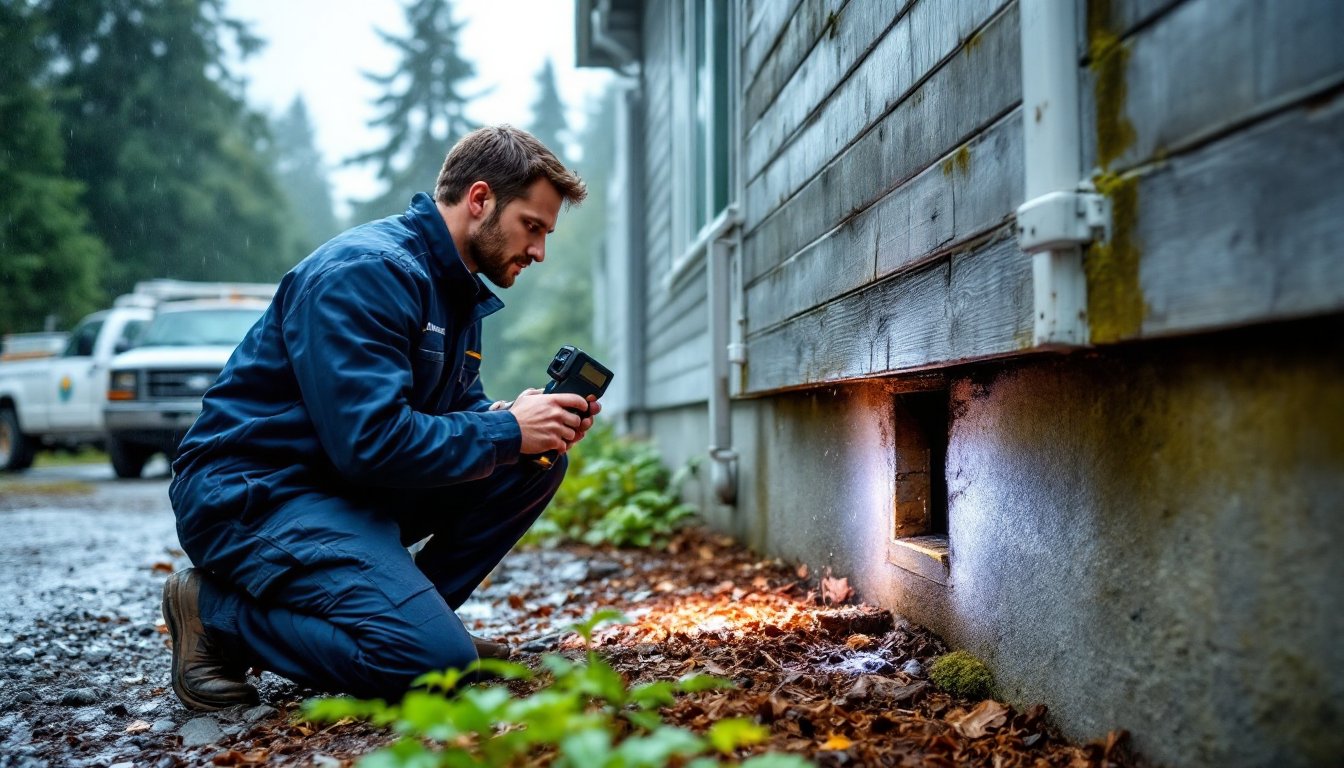
Prevention beats reactive treatment every time. Start with a perimeter inspection twice yearly, spring and fall. Walk the foundation looking for cracks wider than 1/8 inch, gaps around utility penetrations, and damaged vent screens. Seal openings with exterior-grade caulk or foam sealant rated for outdoor use.
Manage moisture aggressively. Kitsap’s rainfall demands proper drainage:
- Extend downspouts at least 6 feet from the foundation.
- Grade soil away from the house at a 5% slope (roughly 6 inches of drop over 10 feet).
- Install vapor barriers in crawl spaces if they’re not already present. 6-mil polyethylene sheeting works for most applications: overlap seams by 12 inches and seal with construction tape.
- Fix leaking hose bibs, condensation on pipes, and roof leaks promptly. Moisture ants and carpenter ants follow water sources.
Trim vegetation back from siding and rooflines. Tree branches touching the house create highways for ants, spiders, and rodents. Maintain a 12-inch clearance between mulch, soil, or plantings and the foundation, direct wood-to-soil contact invites moisture and pests.
Inside, focus on sanitation and exclusion:
- Store firewood 20 feet from the house, elevated off the ground on a rack.
- Vacuum regularly, especially in corners and behind appliances where crumbs accumulate.
- Install door sweeps on exterior doors, use the type with rubber or brush strips that seal gaps over uneven thresholds.
- Keep pantry goods in sealed containers (glass or heavy plastic). Ants and pantry moths exploit torn bags and cardboard boxes.
Following simple organization strategies in basements and garages reduces clutter where pests hide.
Seasonal Pest Control Strategies for the Pacific Northwest
Spring (March–May): Carpenter ants emerge as temperatures rise, swarming to establish new colonies. Inspect around windows, roof eaves, and any areas with previous water damage. Check crawl spaces for standing water and improve ventilation if needed, install additional foundation vents or a dehumidifier rated for crawl space use.
Apply perimeter treatments with granular or liquid insecticides labeled for carpenter ants, focusing on entry points and soil adjacent to the foundation. Baits work well indoors if you’re seeing trailing activity.
Summer (June–August): Wasps and yellow jackets build nests in eaves, attic vents, and ground burrows. Treat nests at dusk when insects are less active. Wear long sleeves, pants, gloves, and consider a face shield, never just safety glasses. Use foaming sprays labeled for wasps that can reach nests 20 feet overhead.
Inspect for ongoing pest prevention needs as humidity draws moisture ants indoors.
Fall (September–November): Rodents seek winter shelter. Seal gaps around pipes, vents, and utility lines using copper mesh (steel wool rusts in Kitsap’s climate) and expanding foam. Check attic vents for damage and install 1/4-inch hardware cloth over larger openings.
Clean gutters to prevent overflow that saturates fascia boards, soft, wet wood attracts carpenter ants and wood-boring beetles.
Winter (December–February): Monitor indoor activity. Rodents nest in insulation and wall voids: listen for scratching in walls or ceilings. Place snap traps along baseboards where droppings appear, use peanut butter or nesting material as bait.
Consider professional winter inspections if you’ve had past issues, especially in crawl spaces where access is difficult.
Maintaining healthy outdoor spaces with proper drainage reduces pest pressure year-round.
Cost Considerations for Pest Control Services in Kitsap
Pricing varies significantly based on infestation severity, property size, and service scope. As of 2026, expect these ranges for Kitsap County (prices fluctuate with market conditions):
One-time treatments:
- General pest service (ants, spiders): $150–$300
- Rodent exclusion and trapping: $300–$800
- Wasp/hornet nest removal: $125–$350 depending on location and nest size
- Carpenter ant treatment: $400–$1,200 for initial service with follow-up
Ongoing service plans:
- Quarterly pest control: $75–$150 per visit (typically four visits annually)
- Monthly monitoring (severe or commercial): $100–$200 per visit
Specialized services:
- Termite inspection: $75–$200 (often free if bundled with treatment)
- Fumigation (rare in residential Kitsap): $1,200–$2,500+
- Crawl space vapor barrier installation: $1,500–$3,500 depending on square footage and accessibility
Most companies offer free inspections with treatment proposals. Compare what’s included: does the price cover follow-up visits? Are exclusion materials (screens, sealants) included or extra?
Bundling services often saves money. If you need both rodent exclusion and carpenter ant treatment, negotiating a combined package typically costs 15–25% less than booking separately.
DIY approaches cost significantly less upfront, $50–$200 for quality traps, baits, sealants, and tools, but demand your time and may not resolve deep infestations. Balance cost against the risk of structural damage or health hazards.
Exploring options with various service providers and reading customer feedback helps you compare value, not just price.
Conclusion
Effective pest control in Kitsap County starts with understanding the region’s unique challenges, moisture, dense vegetation, and year-round activity. Combining proactive exclusion work, moisture management, and strategic treatments (DIY or professional) keeps homes protected without constant reactive measures. Whether sealing foundation cracks yourself or hiring a licensed operator for structural pest issues, addressing root causes delivers lasting results.