
Table of Contents
ToggleHawks aren’t just majestic birds circling overhead, they’re one of nature’s most efficient pest control systems. A single hawk can eliminate hundreds of rodents, rabbits, and other pests annually, reducing crop damage and disease transmission without chemicals or traps. For property owners dealing with persistent rodent or small mammal problems, attracting hawks offers a sustainable, low-maintenance alternative to conventional pest management. This guide covers how hawks function as natural pest controllers, which species work best, what they hunt, and how to safely encourage them onto your land.
Key Takeaways
- Hawks pest control leverages nature’s most efficient predators, with a breeding pair of Red-tailed Hawks consuming 200–300 rodents annually, eliminating the need for chemicals or traps.
- Red-tailed Hawks, Cooper’s Hawks, American Kestrels, and Harris’s Hawks are the most effective species for property-based pest management, each suited to different habitats and prey preferences.
- Attracting hawks requires creating habitat by maintaining open hunting grounds (6–12 inches mowed), installing elevated perches 10–15 feet tall, and reducing rodenticide use to prevent secondary poisoning.
- Hawks are protected under the Migratory Bird Treaty Act; you can legally attract them, but capturing, handling, or possessing them without a federal permit is illegal.
- Small pets and poultry are vulnerable to hawks, especially during nesting season (April–June), so supervise outdoor time and provide covered runs if actively encouraging raptors.
- Hawks stabilize rather than eliminate pest populations, creating a self-sustaining predator-prey balance that delivers long-term, low-maintenance pest suppression without ongoing labor.
Why Hawks Are Natural Pest Controllers
Hawks are apex predators in their territory, equipped with extraordinary vision (up to eight times sharper than humans) and hunting instincts honed over millennia. Unlike chemical treatments that require reapplication or traps that need constant monitoring, hawks patrol properties autonomously, targeting prey daily to meet their caloric needs.
A breeding pair of Red-tailed Hawks can consume 200–300 rodents per year. That’s a significant reduction in mice, voles, and rats, species responsible for structural damage, insulation nesting, wiring chews, and disease vectors like hantavirus and leptospirosis. Hawks also deter pest populations through their presence alone: rodents instinctively avoid open areas when raptors are active overhead.
Hawks don’t require feeding, housing, or veterinary care. Once established on a property, they return seasonally (or year-round in temperate zones) as long as food sources and perching structures remain. They’re particularly effective on rural properties, hobby farms, orchards, and large residential lots where traditional pest control methods may be impractical or cost-prohibitive.
Unlike barn owls, which hunt nocturnally, hawks are diurnal hunters, covering different pest activity windows. Pairing both species creates round-the-clock biological pest suppression.
Common Hawk Species Used for Pest Management
Not all hawks are equally suited for pest control. Species vary in size, prey preference, habitat tolerance, and territorial range. Here are the most effective hawks for property-based rodent management:
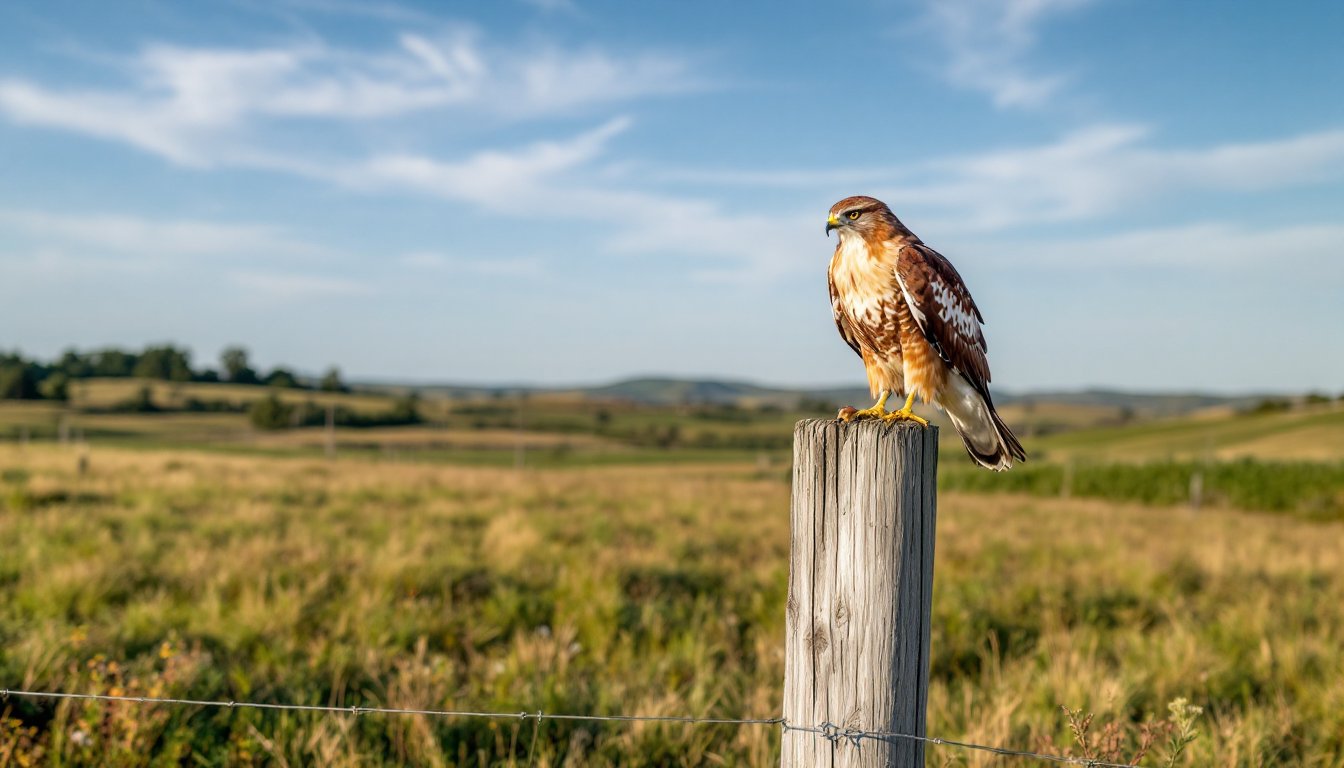
Red-tailed Hawk (Buteo jamaicensis): The most common and adaptable species in North America. Red-tails thrive in open fields, pastures, and suburban edges. They hunt from elevated perches, fence posts, dead trees, utility poles, and target medium-sized prey: rats, ground squirrels, rabbits, and voles. Their broad diet and tolerance for human activity make them ideal for hobby farms and larger residential lots.
Cooper’s Hawk (Accipiter cooperii): Smaller and more agile than Red-tails, Cooper’s Hawks excel in wooded or semi-wooded environments. They hunt birds (starlings, pigeons, sparrows) more than mammals, making them effective for properties with poultry predation or bird-related nuisance issues. They’re more skittish around humans and prefer properties with mature trees.
American Kestrel (Falco sparverius): The smallest North American falcon, kestrels specialize in insects (grasshoppers, beetles) and small rodents (mice, shrews). They’re cavity nesters, readily using nest boxes, and adapt well to agricultural settings. Kestrels are excellent for orchards and vegetable farms where insect pressure is high.
Harris’s Hawk (Parabuteo unicinctus): Found primarily in the southwestern U.S., Harris’s Hawks are social hunters, often working in family groups. They’re highly trainable and used in professional falconry-based pest management, particularly in vineyards and golf courses. Their cooperative hunting makes them effective against larger or evasive prey like jackrabbits.
All these species are protected under the Migratory Bird Treaty Act. You cannot trap, handle, or possess them without a federal falconry or rehabilitation permit. Attracting wild hawks is legal: capturing or relocating them is not.
What Pests Do Hawks Target?
Hawks are opportunistic carnivores, meaning they hunt whatever prey is most abundant and easiest to catch. Their diet shifts seasonally and regionally, but common targets include:
- Rodents: Mice, voles, rats, shrews, ground squirrels, and pocket gophers. These make up 60–80% of most hawk diets in agricultural and suburban settings.
- Rabbits and Hares: Cottontails and jackrabbits are staples for larger species like Red-tails and Harris’s Hawks.
- Small Mammals: Chipmunks, young groundhogs, and moles.
- Birds: Starlings, sparrows, pigeons, and other small to medium songbirds (especially by Cooper’s Hawks).
- Reptiles: Snakes, lizards, and occasionally turtles in warmer climates.
- Large Insects: Grasshoppers, crickets, beetles, and cicadas (primarily by kestrels).
Hawks generally avoid heavily wooded or brushy terrain where visibility is limited. They prefer open habitats, fields, pastures, mowed edges, and sparse woodland borders, where prey movement is visible from above. If your property has dense undergrowth, hawks will be less effective: consider mowing perimeter zones or maintaining sight lines near perches.
Hawks won’t eliminate pests entirely. They stabilize populations at sustainable levels, reducing but not eradicating prey. This is beneficial long-term: local ecosystems remain balanced, and hawks stay resident. Properties using hawks alongside seasonal pest monitoring see the best results.
How to Attract Hawks to Your Property for Pest Control
Attracting hawks requires creating habitat conditions that support hunting and nesting. Hawks won’t relocate for food alone, they need perches, open sightlines, and minimal human disturbance.
Maintain Open Hunting Grounds: Hawks hunt visually from elevated perches or while soaring. Mow large sections of your property to 6–12 inches to mimic natural grassland. Leave some unmowed buffer zones (12–24 inches) along edges to support prey populations, hawks need rodents present, just not overrun.
Install Perching Structures: Dead trees (snags) are prime hawk habitat, but if you lack mature timber, install artificial perches. Use 4×4 or 6×6 treated posts, 10–15 feet tall, spaced 100–200 feet apart across open areas. Top with a horizontal 2×6 or 2×8 crossbar for landing stability. Raptors prefer perches with 360-degree visibility and minimal leaf cover.
Reduce Poison Rodenticide Use: Hawks and owls die from secondary poisoning when they consume rodents that have ingested anticoagulant bait. If you must use rodenticides, switch to snap traps or mechanical solutions in areas where hawks are active. Many homeowners find that once raptors establish territory, chemical rodent control becomes unnecessary.
Limit Outdoor Lighting: Bright security lights disrupt nocturnal prey activity and can deter hawks from roosting nearby. Use motion-activated lighting or shields that direct illumination downward.
Provide Water Sources: While hawks get most hydration from prey, a shallow birdbath or stock tank (1–3 inches deep) can attract them, especially in arid regions. Place it in open areas with clear sightlines, hawks are vulnerable while drinking and avoid enclosed or ambush-prone locations.
For expert guidance on creating raptor-friendly landscapes, HomeAdvisor offers project planning resources and contractor referrals for habitat improvement work.
Installing Hawk Perches and Nesting Boxes
Perches are straightforward: nesting platforms require more planning. Red-tailed Hawks and Harris’s Hawks prefer open-top platforms, while kestrels and screech-owls use enclosed nest boxes.
Platform Nests (for buteos like Red-tails):
- Build a 24×24-inch platform from ½-inch exterior plywood or 2×6 lumber.
- Mount on a 15–25-foot pole or dead tree, with a slight rim (1–2 inches) to prevent eggs from rolling.
- Add a shallow layer of sticks or straw as starter material, hawks often enhance nests over time.
- Position platforms near open hunting fields, away from dense tree cover.
- Install in late fall or winter: hawks scout nesting sites from January through March.
Kestrel Nest Boxes:
- Use a 9×9-inch floor, 12–15 inches tall, with a 3-inch entrance hole.
- Mount 10–30 feet high on poles, barn walls, or isolated trees.
- Face openings east or southeast to capture morning sun and avoid harsh afternoon heat.
- Add 2–3 inches of wood shavings (not cedar) as nesting substrate.
Both styles should be installed with predator guards, metal collars or baffles below the box to deter raccoons and snakes. Check local regulations: some states require permits for raptor nest structures on certain land types.
If you’re unsure about safe installation heights or pole-setting, Angi connects homeowners with contractors experienced in wildlife-friendly construction.
Inspect platforms annually in late fall. Remove old nesting material and check for structural damage. Hawks often reuse successful sites for multiple seasons.
Safety Considerations When Encouraging Hawks
Hawks are wild predators. While they’re generally non-aggressive toward humans, nesting adults can become defensive, and their presence affects other wildlife.
Protect Small Pets: Hawks view small dogs, cats, and rabbits as potential prey. Cats under 10 pounds and toy-breed dogs are at risk, especially in open yards. Free-roaming chickens, ducks, and guinea fowl are also vulnerable. Use covered runs or supervise outdoor time if you’re actively encouraging raptors. Cooper’s Hawks are particularly bold around poultry.
Nesting Season Aggression: Red-tailed Hawks and Cooper’s Hawks may dive-bomb humans who approach nests too closely (within 50–100 feet). This behavior peaks from April through June. Avoid mowing, pruning, or heavy activity near active nests during this window. Wear a wide-brimmed hat if you must work nearby, most strikes target the highest point of a perceived threat.
Secondary Poisoning: As noted earlier, rodenticides are a leading cause of raptor mortality. If you’re committed to encouraging hawks, transition to non-toxic pest management methods. Snap traps, exclusion, and habitat modification are effective alternatives.
Songbird Predation: Hawks, especially Cooper’s Hawks, will hunt songbirds. If you maintain backyard feeders, expect some predation. Position feeders near dense shrubs or evergreens where small birds can escape quickly. Don’t view this as a negative: hawks are native predators and play a role in controlling weak or diseased bird populations.
Legal Protections: All hawks are federally protected. It’s illegal to harm, harass, or possess them or their nests without permits. If a hawk is injured, contact a licensed wildlife rehabilitator, attempting home care is both illegal and dangerous.
For properties balancing raptor conservation with other wildlife interests, Gardenista offers design ideas for layered landscapes that support diverse species.
Conclusion
Hawks deliver long-term, low-maintenance pest suppression that integrates seamlessly into rural and suburban properties. By providing perches, open hunting grounds, and nesting structures, landowners create habitat that supports resident raptors season after season. The payoff is measurable: fewer rodents, reduced structural damage, and a self-sustaining predator-prey balance that requires no chemicals or ongoing labor. With proper planning and respect for these protected birds, hawks become reliable partners in keeping pest populations in check.