
Table of Contents
ToggleSouth Florida homeowners know the drill: warm weather year-round means pest pressure never lets up. In Boca Raton, the combination of humidity, lush landscaping, and dense neighborhoods creates a perfect storm for everything from subterranean termites to German cockroaches. Whether you’re dealing with an active infestation or trying to keep your home sealed tight against invaders, understanding local pest behavior and control strategies is essential. This guide walks through the most common threats, proven prevention tactics, and when it’s time to bring in a licensed professional.
Key Takeaways
- Boca Raton’s year-round warm climate and humidity create continuous pest pressure, making year-round pest control essential for homeowners.
- Subterranean termites cause an estimated $5 billion in annual U.S. damage, with Florida leading the nation—early detection and professional treatment are critical since homeowners insurance typically doesn’t cover termite damage.
- Effective Boca pest control combines DIY prevention tactics like moisture control, sealing entry points, and sanitation with professional quarterly or monthly monitoring services.
- Licensed professionals are required for termite treatment, active cockroach infestations, and rodent removal—verify Florida Department of Agriculture and Consumer Services (FDACS) licensing and request written estimates before hiring.
- Common Boca pests including German cockroaches, carpenter ants, and drywood termites can be identified by specific signs like mud tubes, frass piles, and swarming activity—routine property inspections every few months catch problems early.
Why Pest Control Is Essential for Boca Raton Homeowners
Boca’s subtropical climate doesn’t give pests an off-season. Year-round warmth and high humidity mean termites swarm, mosquitoes breed, and ants forage 365 days a year. Unlike northern climates where winter kills off populations, South Florida properties face continuous pressure.
Structural damage is the biggest financial risk. Subterranean termites cause an estimated $5 billion in U.S. property damage annually, and Florida leads the nation in termite activity. A mature colony can consume a foot of 2×4 framing in six months if left unchecked. Homeowners insurance typically doesn’t cover termite damage, making prevention and early detection critical.
Health concerns matter too. Roaches trigger asthma and allergies, rodents carry hantavirus and leptospirosis, and mosquitoes transmit Zika and dengue fever. Rodent droppings in attics or crawl spaces can contaminate insulation and ductwork. Regular pest management protects both your investment and your family’s health.
Property values also take a hit. A failed termite inspection can delay or kill a real estate transaction, and visible pest activity during showings sends buyers running. Maintaining a professional pest management schedule adds value when it’s time to sell.
Most Common Pests in Boca Raton and How to Identify Them
Termites and Wood-Destroying Insects
Subterranean termites build colonies underground and tunnel up through soil to reach wood framing. Look for mud tubes on foundation walls, slab edges, or inside crawl spaces, they’re about the width of a pencil and run vertically from soil to wood. Swarming typically happens in early spring, when winged reproductives emerge after rain. Discarded wings near windowsills or door frames signal an active colony nearby.
Drywood termites infest attics, wood siding, and furniture without needing soil contact. They leave behind tiny fecal pellets (frass) that look like sawdust or sand piles below exit holes. Tap suspected wood with a screwdriver handle, hollowed areas sound different and may flex under pressure. Both species require professional treatment, often involving liquid termiticides, bait systems, or localized fumigation.
Powderpost beetles bore into hardwood flooring, trim, and cabinets, leaving small exit holes (1/16″ to 1/8″ diameter) and fine, powdery dust. Damage is slower than termites but still serious in historic homes with original lumber. Professional treatment may include surface sprays or injection into galleries.
Ants, Roaches, and Indoor Invaders
Carpenter ants are large (up to ½” long) and black or red-black. They excavate galleries in damp or damaged wood, look for coarse sawdust piles below wall voids, window frames, or roof eaves. They don’t eat wood like termites but will hollow out structural members if colonies grow large enough. Colonies often start in exterior trees or stumps, then satellite indoors.
Ghost ants are tiny (1/16″), with dark heads and pale, nearly invisible abdomens. They love moisture and sugar, swarming around sinks, dishwashers, and potted plants. Trails appear suddenly and vanish just as fast. Baiting works better than sprays, since colonies fragment when threatened.
German cockroaches are tan, about ½” to ⅝” long, with two dark stripes behind the head. They reproduce fast, one female can produce 30,000 offspring in a year under ideal conditions. Check behind appliances, inside cabinets, and around plumbing penetrations. They prefer kitchens and bathrooms where food debris and moisture are present. Integrated pest management (IPM) combining sanitation, exclusion, baits, and growth regulators is the gold standard for control.
American cockroaches (palmetto bugs) are larger (1½” to 2″), reddish-brown, and often fly short distances. They live outdoors in mulch, storm drains, and tree cavities but enter homes through gaps around doors, windows, and roof vents. Sealing entry points and reducing exterior moisture are key prevention steps.
Several regional pest strategies used in nearby coastal cities also apply to Boca’s subtropical environment.
DIY Pest Prevention Tips for Boca Homes
Prevention beats treatment every time. Start with moisture control. Fix leaking faucets, repair roof damage, and ensure gutters and downspouts direct water at least 6 feet away from the foundation. Subterranean termites and carpenter ants both need damp wood to establish colonies. Use a dehumidifier in basements or crawl spaces to keep relative humidity below 50%.
Seal entry points around the building envelope. Apply silicone or polyurethane caulk around windows, doors, utility penetrations, and foundation cracks. Install door sweeps on exterior doors, aim for a snug fit with no daylight visible underneath. Add ¼” hardware cloth over crawl space vents, attic louvers, and gable vents to block rodents and large insects. Check for gaps around plumbing under sinks: fill with steel wool and expanding foam.
Keep landscaping away from the house. Maintain at least a 12-inch clearance between mulch, soil, or plants and the siding or foundation. Mulch holds moisture and provides cover for termites, ants, and roaches. Trim tree branches and shrubs so they don’t touch the roof or walls, these act as highways for pests. Store firewood at least 20 feet from the house, elevated on a rack.
Sanitation matters indoors. Wipe down counters and sweep floors daily to remove crumbs and spills. Store dry goods (flour, sugar, cereal) in airtight containers, not the original packaging. Take out garbage nightly and use bins with tight-fitting lids. Clean behind and under appliances quarterly: food debris accumulates in hard-to-reach spots.
In kitchens and bathrooms, moisture management techniques like running exhaust fans during showers and fixing slow drains help eliminate breeding sites for drain flies and fungus gnats. Inspect under sinks for leaks: even minor drips attract pests.
Outdoor lighting attracts insects, which in turn attract predators like spiders and geckos. Swap incandescent bulbs for yellow bug lights or LED bulbs with lower color temperatures near entryways. Consider motion-sensor fixtures to limit operating hours.
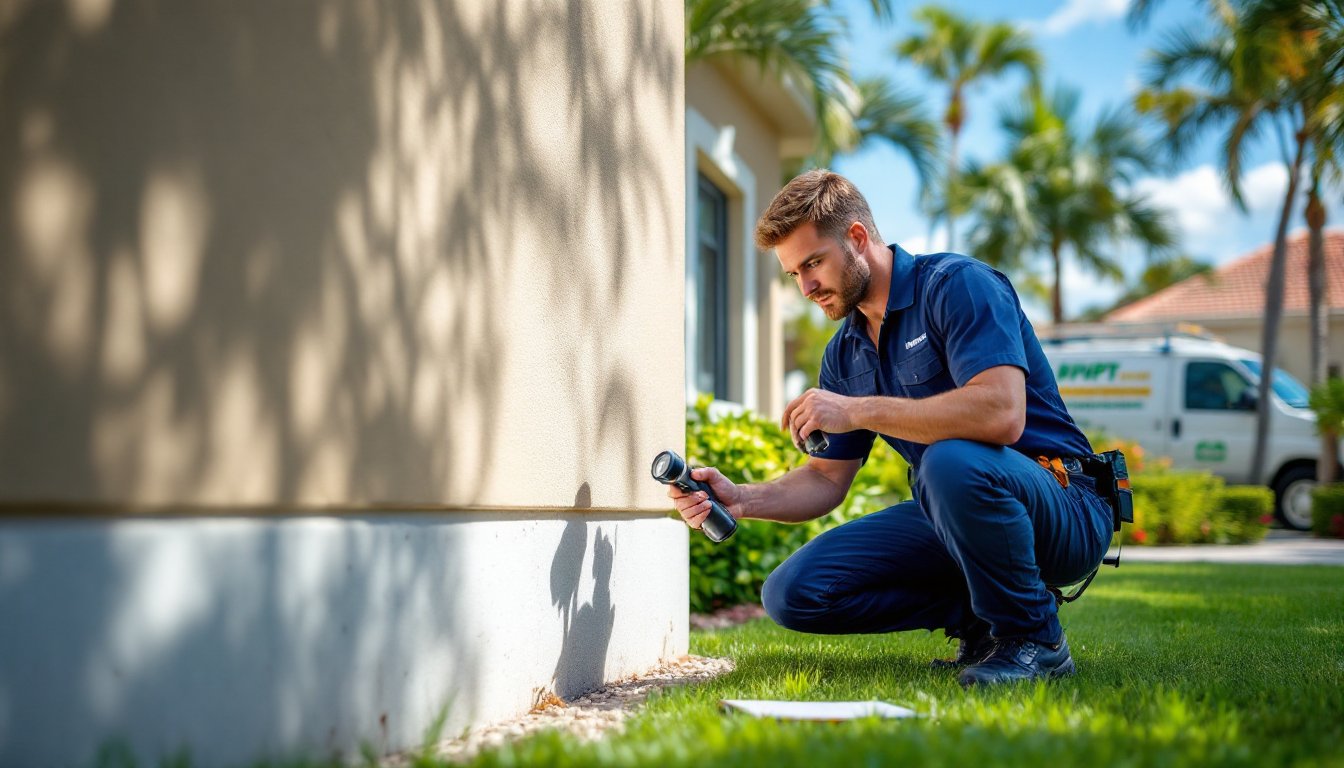
Routine inspections catch problems early. Walk your property every few months, checking for mud tubes, frass piles, damaged wood, or unusual insect activity. Use a flashlight and screwdriver to probe suspect areas. Document findings with photos if you need to call a pro.
When to Call a Professional Pest Control Service
Some infestations are beyond DIY methods. Termites always require a licensed professional. Treatment options include liquid termiticides (applied around the foundation perimeter and under slabs), bait systems (monitoring stations with slow-acting toxins), or spot fumigation for drywood colonies. Florida law requires pest control operators treating termites to hold a state license and provide treatment contracts with warranties.
Active German cockroach infestations are notoriously difficult to eliminate without professional-grade insect growth regulators (IGRs) and gel baits. If you see roaches during the day, the population is likely large and stressed for space, call a pro. Expect multiple treatments over 4–6 weeks, along with sanitation coaching.
Rodents in attics, walls, or crawl spaces need trapping, exclusion, and contaminated insulation removal. A licensed technician can identify entry points you might miss and install one-way exclusion doors. Rodent work often overlaps with attic restoration or insulation replacement, especially if droppings or urine damage is extensive.
When selecting a service, verify the company holds a Florida Department of Agriculture and Consumer Services (FDACS) pest control license. Ask whether they’re insured for both liability and worker’s compensation. Request a detailed inspection report with photos and treatment recommendations. Reputable companies offer tiered plans, one-time treatments, quarterly service, or monthly monitoring.
Pricing varies widely. Expect $75–$150 for a one-time interior treatment, $150–$300 for quarterly service (interior and exterior), and $1,200–$3,000+ for termite treatments depending on home size and method. Top-rated pest control providers in Boca Raton offer free inspections and written estimates before starting work.
Watch for red flags: high-pressure sales tactics, no written contract, or refusal to provide proof of licensing. Check online reviews but focus on patterns, one bad review isn’t disqualifying, but repeated complaints about missed appointments or ineffective treatments are.
For routine maintenance, quarterly visits work well in South Florida’s climate. Technicians reapply exterior perimeter treatments, inspect for new activity, and adjust baiting stations as needed. Many pest management companies offer service guarantees with free re-treatments if pests return between scheduled visits.
If you’re dealing with specialty pests, bed bugs, carpenter bees, or wildlife like raccoons or bats, ask whether the company has experience and appropriate licensing. Some pest control operators don’t handle wildlife removal, which may require a separate nuisance wildlife permit. Testing services like Good Housekeeping evaluate both effectiveness and safety of various treatment products and methods.
Conclusion
Pest control in Boca Raton isn’t optional, it’s ongoing maintenance, like changing air filters or servicing your HVAC. Combine smart prevention (moisture control, exclusion, sanitation) with professional treatment when needed, and you’ll keep your home protected year-round. Stay ahead of infestations rather than reacting to them, and your investment stays safe.