
Table of Contents
ToggleAlpharetta’s tree-lined neighborhoods and mild Georgia climate make it a great place to live, and an equally attractive habitat for pests. From termites chewing through structural lumber to mosquitoes breeding in clogged gutters, homeowners face year-round challenges that go beyond mere annoyance. Left unchecked, pest infestations can compromise property value, trigger health issues, and rack up thousands in repair costs. This guide walks through the most common invaders in North Georgia, practical prevention methods any homeowner can tackle, and when it’s time to call in a licensed professional.
Key Takeaways
- Alpharetta pest control requires year-round vigilance due to North Georgia’s warm, humid climate that supports termites, mosquitoes, fire ants, rodents, and other invaders capable of damaging property and triggering health issues.
- DIY prevention strategies—including moisture control, landscape management, sealing foundation cracks, and eliminating food sources—can significantly reduce pest entry points before professional intervention becomes necessary.
- Licensed Alpharetta pest control professionals are essential for termite treatments, active cockroach or bed bug infestations, structural damage, and health risks, as these require specialized equipment, state certification, and integrated pest management techniques.
- Verify pest control company credentials by confirming Georgia Department of Agriculture licensing, checking insurance certificates, and prioritizing companies that use integrated pest management (IPM) rather than routine pesticide-only approaches.
- Seasonal pest patterns shift dramatically in North Georgia: spring and summer bring termites, mosquitoes, and ants; fall triggers rodent invasion; and winter provides no relief as pests shelter indoors and termites remain active below the frost line.
- Homeowners typically pay $100–$300 for one-time general pest treatment or $300–$550 annually for quarterly service, with termite-specific treatments ranging from $1,200–$2,500 based on home size and method.
Common Pests Threatening Alpharetta Homes
Alpharetta sits in USDA hardiness zone 7b, which means warm summers, mild winters, and humidity, a trifecta that supports a wide range of pests. Termites top the list for structural damage. Subterranean termites are endemic to North Georgia and can consume ½ to 1 pound of wood per day in a mature colony. Homeowners often don’t notice activity until mud tubes appear on foundation walls or sagging floors indicate serious damage.
Mosquitoes thrive from April through October, breeding in standing water as shallow as a bottle cap. Beyond the itchy welts, they’re vectors for West Nile virus and Eastern equine encephalitis. Fire ants build mounds in lawns and deliver painful stings that can trigger allergic reactions. Cockroaches, primarily American and German species, infest kitchens and bathrooms, contaminating food and exacerbating asthma.
Rodents (Norway rats and house mice) squeeze through gaps as narrow as ¼ inch to access attics and crawl spaces. They chew through electrical wiring (a fire hazard recognized by the National Fire Protection Association) and leave droppings that carry hantavirus. Spiders, including black widows and brown recluses, hide in basements, woodpiles, and seldom-used storage areas. While most spiders are harmless pest predators, venomous species warrant caution.
Seasonal Pest Patterns in North Georgia
Pest pressure shifts with the calendar. Spring (March–May) brings termite swarms, typically after rain when winged reproductives leave established colonies to start new ones. This is also prime mosquito season as temperatures rise above 50°F consistently. Ants forage aggressively, trailing into kitchens through foundation cracks.
Summer (June–August) ramps up activity across the board. Mosquitoes peak, cockroaches breed faster in heat, and wasps build nests under eaves and in wall voids. Fleas and ticks thrive in tall grass and wooded areas, important for homes with pets or adjacent to greenbelts.
Fall (September–November) sees rodents seeking indoor shelter as outdoor food sources dwindle. Stink bugs and Asian lady beetles cluster on sunny exterior walls before infiltrating attics. Spiders move indoors, and late-season mosquitoes remain active until the first hard freeze.
Winter (December–February) offers no real break. Rodents nest in insulation, and overwintering pests hide in wall cavities. Termites remain active below the frost line, Georgia’s mild winters mean colonies never fully shut down.
DIY Pest Prevention Strategies for Alpharetta Homeowners
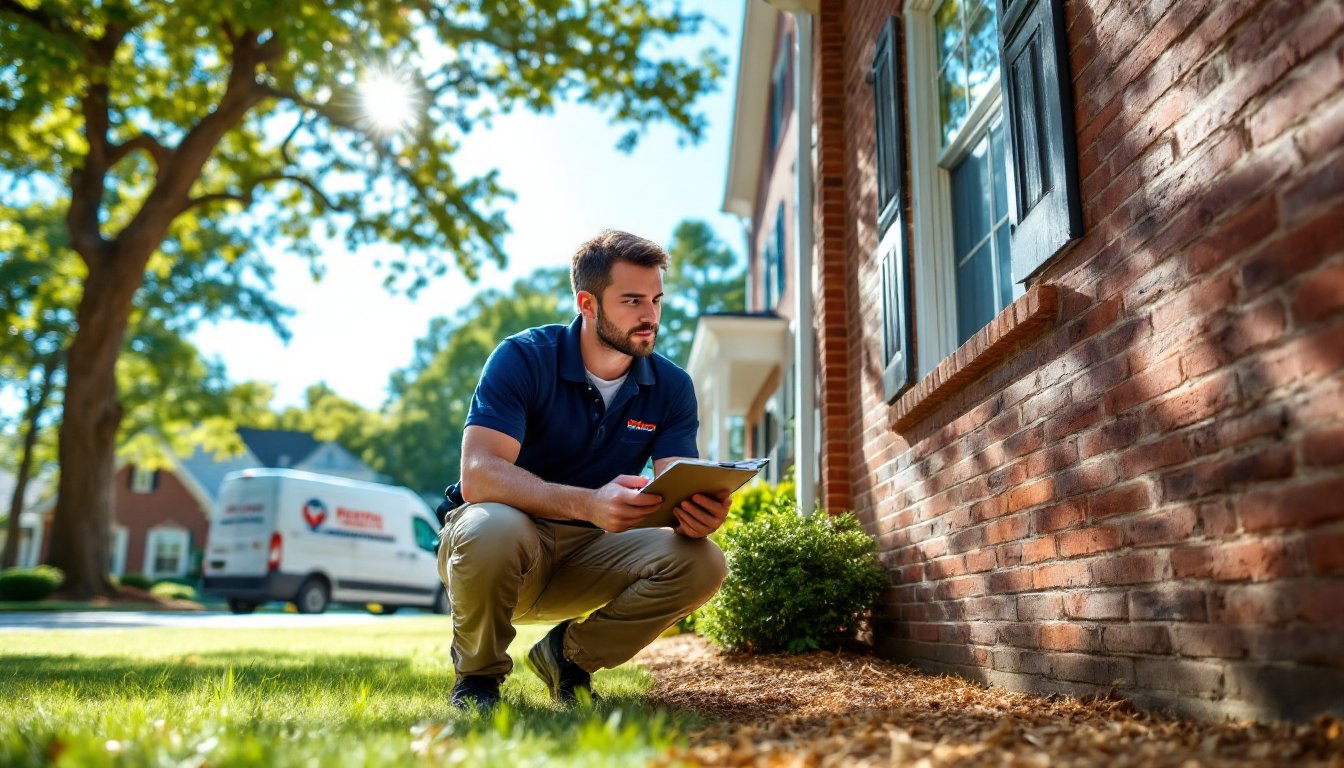
Most pest problems start outside. The goal is to eliminate food, water, and shelter before pests reach the threshold. Start with a perimeter walk: inspect the foundation, siding, and roofline for gaps, cracks, and obvious entry points.
Moisture control is critical. Repair leaky hose bibs, downspouts, and irrigation lines. Ensure gutters drain away from the foundation, standing water within 3 feet of the house invites mosquitoes and attracts termites. Check crawl space vents for adequate airflow: install a 6-mil polyethylene vapor barrier over bare soil to reduce humidity (a termite attractant).
Landscape management matters. Trim tree branches and shrubs so they don’t contact siding or the roof, branches act as highways for ants, rodents, and squirrels. Keep mulch beds at least 6 inches away from the foundation and no deeper than 2–3 inches: excessive mulch retains moisture and harbors pests. Store firewood on racks at least 20 feet from the house and 5 inches off the ground.
Inside, eliminate food sources. Store pantry staples in airtight containers (not the original cardboard or plastic bags). Clean up crumbs and spills immediately, and take out garbage nightly. Fix dripping faucets and repair any plumbing leaks under sinks, cockroaches and silverfish need water to survive.
Sealing Entry Points and Exterior Maintenance
Rodents and insects exploit surprisingly small openings. Walk the exterior with proven sealing techniques in mind, focusing on these common weak spots:
- Foundation cracks: Fill cracks wider than ⅛ inch with polyurethane or silicone caulk. For larger gaps (up to 1 inch), use mortar or hydraulic cement.
- Utility penetrations: Seal around pipes, cables, and conduit where they enter the structure. Use steel wool (rodents won’t chew it) packed into gaps, then cover with expanding foam or caulk.
- Weep holes: These small openings in brick veneer allow moisture drainage but also admit pests. Install stainless-steel weep hole covers or insert copper mesh, never fully seal them.
- Door sweeps and thresholds: Replace worn sweeps on exterior doors. The gap should be ¼ inch or less. Inspect garage door seals: replace brittle or torn rubber.
- Attic vents and soffits: Cover with ¼-inch hardware cloth (not window screen, which rodents chew through). Check for gaps where the roof meets the fascia.
- Windows and screens: Repair torn screens immediately. Check that window frames fit snugly and weatherstripping is intact.
Pro tip: Do this work in daylight from the outside, then after dark from the inside with lights on. Light leaking through cracks reveals gaps you missed.
For termite prevention, never let soil contact wood siding or framing. The International Residential Code (IRC) requires 6 inches of clearance between soil and wood. If your siding violates this, you’ll need to excavate soil or install a termite shield.
Safety note: Wear nitrile gloves when handling caulk and foam, and use a dust mask if drilling or cutting material that may contain lead paint or asbestos (common in homes built before 1978).
When to Call a Professional Pest Control Service
DIY methods work for prevention and minor issues, but certain situations demand licensed expertise. Termites require professional treatment, period. Liquid termiticides (applied in trenches around the foundation) and bait station systems need specialized equipment and state certification. Termite damage often isn’t covered by homeowner’s insurance, so early professional intervention saves money.
Active infestations of cockroaches, bed bugs, or fleas rarely respond to over-the-counter sprays. These pests reproduce quickly, and improper pesticide use can scatter them to new areas or build resistance. Professionals use integrated pest management (IPM): identification, targeted treatment, and follow-up monitoring.
Structural concerns like rodents in walls or attics, carpenter ants tunneling through framing, or wasps nesting inside soffits require safe removal and exclusion work. Rodent control often involves trapping, entry-point sealing, and insulation removal if contamination is severe, not a weekend project.
Health risks escalate the need. If you find signs of rodent droppings in food-prep areas, or if anyone in the household has asthma or allergies triggered by pests, don’t delay. Professionals have access to low-toxicity products and application methods (baiting, crack-and-crevice treatment) that minimize exposure.
Legal and code issues: Some treatments require permits or notification. For example, fumigation (tenting) for drywood termites involves temporary evacuation and compliance with Georgia Department of Agriculture regulations. If you’re selling a home, many buyers require a Wood Infestation Inspection Report (WDI) and treatment documentation.
Recognize limits. If you’ve treated for ants or roaches multiple times with no improvement, the problem is likely deeper, colony nesting inside walls, or a moisture issue fueling the infestation. Professionals use moisture meters and thermal cameras to diagnose the root cause.
When not to DIY: If the pest is venomous (black widows, brown recluses), if you’re dealing with a stinging insect nest above ground level, or if the infestation involves multiple species (a sign of a larger environmental problem), bring in a pro.
Choosing the Right Pest Control Company in Alpharetta
Alpharetta has no shortage of pest control services, but quality varies. Start by verifying state licensing. Georgia requires pest control operators to hold a license issued by the Georgia Department of Agriculture. Ask for the company’s license number and confirm it’s current (you can verify online).
Insurance matters. The company should carry both general liability and workers’ compensation. If a technician is injured on your property or damages your home during treatment, you don’t want to be liable. Request a certificate of insurance.
Look for integrated pest management (IPM) practices. Companies that rely solely on routine pesticide sprays treat symptoms, not causes. IPM emphasizes inspection, identification, exclusion, and targeted treatment with minimal chemical use. Ask what their process involves, good companies will inspect before quoting.
Experience with local pests counts. A company familiar with North Georgia’s termite pressure, fire ant populations, and seasonal mosquito patterns will deliver better results than a national franchise with rotating technicians. Ask how long they’ve operated locally and whether techs receive ongoing training.
Compare service agreements carefully. Many companies offer quarterly treatments bundled with guarantees. Read the fine print: Does the guarantee cover re-treatments between visits? Are there limits on the types of pests covered? What’s the cancellation policy?
Pricing transparency is non-negotiable. Reputable companies provide written estimates after inspection, breaking out initial treatment and recurring service costs. According to cost data from HomeAdvisor, Alpharetta homeowners pay $100–$300 for a one-time general pest treatment and $300–$550 annually for quarterly service, though termite treatments run $1,200–$2,500 depending on home size and treatment method. Be wary of quotes that seem too low, effective treatment requires quality products and time.
Check references and reviews. Look beyond star ratings: read detailed reviews on local service directories for mentions of customer service, punctuality, and treatment effectiveness. Ask neighbors for recommendations, word-of-mouth matters in tight-knit communities.
Red flags: High-pressure sales tactics, refusal to provide written estimates, unlicensed technicians, or companies that won’t explain what products they’re using and why. If a company won’t answer your questions or rushes you into a contract, walk away.
Finally, ask about environmental and pet safety. Good companies disclose active ingredients, specify re-entry times after treatment, and offer low-toxicity options for households with children or pets. If you maintain an organic garden or have concerns about pollinators, discuss this upfront.
Conclusion
Pest control in Alpharetta isn’t a set-it-and-forget-it task, it’s an ongoing process that blends prevention, monitoring, and timely professional intervention. By understanding local pest patterns, maintaining your home’s exterior, and knowing when to call for backup, you can protect both your property investment and your family’s health. Start with a thorough perimeter inspection this weekend, and schedule a professional evaluation if you’ve seen any warning signs.