
Table of Contents
ToggleRoaches aren’t just creepy, they’re resilient invaders that can turn a clean home into a nightmare. Whether you’re dealing with German cockroaches in the kitchen or American roaches sneaking up from the basement, effective control requires more than just a can of spray. This guide breaks down proven commercial products, natural methods, and when it’s time to bring in a pro. No fluff, just tactics that work.
Key Takeaways
- Gel baits and bait stations are the gold standard for DIY roach control, working by allowing roaches to ingest poison and carry it back to the colony for maximum elimination.
- Insect Growth Regulators (IGRs) paired with gel baits create a one-two punch by killing active roaches while preventing the next generation from reproducing.
- Best pest control for roaches requires a layered approach combining sanitation, exclusion, gel baits, IGRs, and natural methods rather than relying on surface sprays alone.
- Natural methods like diatomaceous earth and soapy water work slower and are best used as supplements to commercial products rather than standalone solutions.
- Call a professional exterminator if you spot roaches during the day, find egg cases in multiple rooms, or experience repeat infestations after treatment.
- Fixing leaks, sealing cracks, and eliminating moisture and food sources are critical foundations that prevent roaches from thriving in warm, moist environments.
Why Roaches Are So Difficult to Eliminate
Roaches have survived for millions of years by being exceptionally good at hiding, breeding, and adapting. A single female German cockroach can produce up to 400 offspring in her lifetime, and many species have developed resistance to common insecticides.
Their flat bodies allow them to squeeze into cracks as thin as 1/16 inch, about the width of a dime. They’re nocturnal, so by the time you spot one during the day, there’s likely a heavy infestation already established. Roaches also communicate through pheromones, leaving chemical trails that guide others to food, water, and harborage sites.
Temperature and humidity matter, too. Most roach species thrive in warm, moist environments between 70°F and 80°F. Kitchens, bathrooms, and basements with leaky pipes or condensation are prime real estate. That’s why surface sprays alone rarely solve the problem, you’ve got to eliminate food sources, moisture, and entry points while targeting the population at multiple life stages.
Top-Rated Commercial Roach Control Products
Gel Baits and Bait Stations
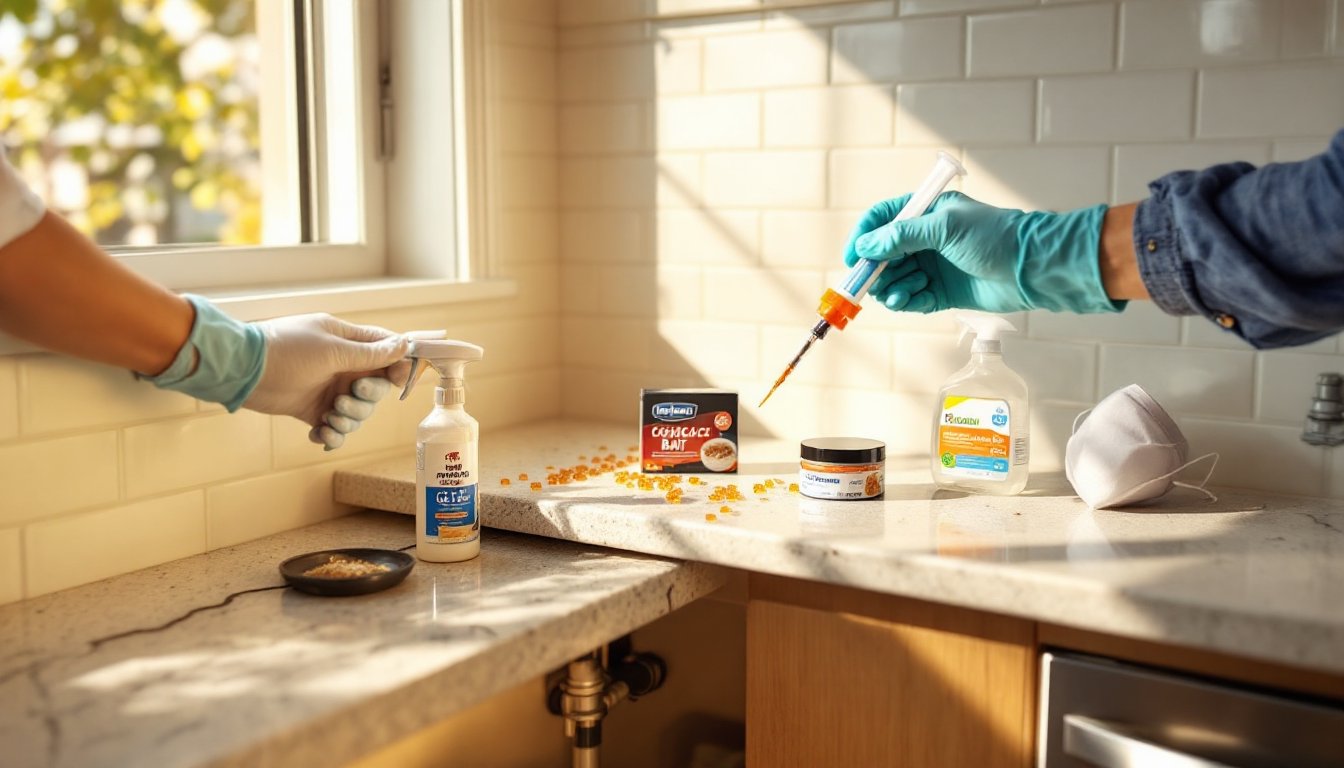
Gel baits are the gold standard for DIY roach control. Products like Advion Cockroach Gel Bait and Syngenta Dupont use active ingredients such as indoxacarb or fipronil, which roaches ingest and carry back to the colony. The delayed action allows them to poison nestmates and nymphs, creating a domino effect.
Application matters. Place pea-sized dots of gel in cracks, crevices, under appliances, and along baseboards, anywhere you’ve seen roach activity or droppings (which look like black pepper or coffee grounds). Reapply every 2-3 weeks or when the bait is consumed. Avoid spraying insecticides near gel baits, as the repellent effect can deter roaches from feeding.
Bait stations like Combat Max or Hot Shot offer a mess-free alternative. These plastic enclosures contain bait that roaches enter, feed on, and carry back. They’re ideal for homes with kids or pets, since the bait is enclosed. Place stations near water sources, behind appliances, and along wall edges. Replace every 3 months or as directed. According to experts in pest control, gel baits paired with stations provide the most comprehensive coverage.
Insect Growth Regulators (IGRs)
IGRs like Gentrol Point Source or Hydroprene disrupt roach reproduction by preventing nymphs from maturing into breeding adults. They don’t kill on contact, but they’re a critical component of long-term control.
IGRs come in aerosols, concentrates, or slow-release discs. The discs are particularly effective, one unit can cover 75 square feet for up to 3 months. Place them in cabinets, under sinks, or in wall voids. Pair IGRs with gel baits for a one-two punch: the bait kills active roaches, while the IGR prevents the next generation.
Some homeowners overlook this step, but it’s like skipping primer before paint, you’ll get faster, longer-lasting results if you use both. For severe infestations, many professional pest control strategies combine IGRs with traditional insecticides.
Natural and DIY Roach Control Methods
If you prefer low-toxicity options or want to supplement commercial products, several natural methods show real-world results, though they work slower and require diligence.
Diatomaceous earth (DE) is a fine powder made from fossilized algae. Food-grade DE damages roach exoskeletons, causing dehydration and death within 48 hours of contact. Apply a thin, even layer (think dusting, not piling) along baseboards, behind appliances, and in wall voids. Wear a dust mask, DE is non-toxic but irritating to lungs.
Boric acid is another proven option. Mix it with sugar or flour to create a DIY bait (3 parts acid to 1 part attractant), or dust it lightly in cracks and crevices. Roaches ingest it while grooming their legs, and it disrupts their digestive systems. Keep it away from kids and pets, and avoid heavy application, roaches will avoid visible piles.
Soapy water in a spray bottle kills roaches on contact by clogging their breathing pores. Mix 2 tablespoons of dish soap per quart of water. It’s a decent stopgap for visible roaches, but it won’t touch the colony. Many DIY enthusiasts find that pairing homemade traps with commercial baits yields faster results, as outlined in guides like do-it-yourself pest control.
Essential oils (peppermint, eucalyptus, tea tree) are often touted online, but evidence is mostly anecdotal. They may repel roaches temporarily, but they won’t eliminate an infestation. Use them as a deterrent after you’ve addressed the root problem, not as a standalone fix.
When to Call a Professional Exterminator
Some infestations are beyond DIY scope. If you’re seeing roaches during the day, finding egg cases (oothecae) in multiple rooms, or dealing with repeat infestations after treating, it’s time to call a licensed pest control operator.
Professionals have access to commercial-grade insecticides and application equipment homeowners can’t buy. They’ll perform a thorough inspection to identify species, harborage sites, and entry points. Many pros use a combination of gel baits, residual sprays, dusts, and IGRs applied in wall voids, attics, and crawl spaces.
Fumigation or heat treatment may be necessary for severe infestations in multi-unit buildings or homes with structural issues. Fumigation involves sealing the structure and releasing gas that penetrates all voids, killing roaches at every life stage. Heat treatment raises the interior temperature to 130°F or higher for several hours, which is lethal to roaches but safer than chemicals. Both require vacating the home and are typically reserved for extreme cases.
Cost varies widely, expect $100–$300 for a one-time treatment, or $300–$600+ for initial service plus follow-ups. German cockroach infestations often require 3–6 visits over several months. Companies like Aptive Pest Control or HomeTeam Pest Control offer recurring plans with guarantees.
If you’re in an apartment, notify your landlord immediately. Roaches travel through shared walls and plumbing, so treating just one unit rarely works. Many jurisdictions require landlords to provide pest control in multi-family buildings.
Safety note: Always ask for a copy of the pesticide label and Safety Data Sheet (SDS). Licensed applicators should explain re-entry times and any prep work (like removing pets, covering food, or vacating for a specified period). If you have health concerns or are pregnant, discuss low-toxicity options upfront.
Conclusion
Roach control isn’t a one-and-done deal, it’s a layered strategy. Start with sanitation and exclusion: fix leaks, seal cracks, eliminate clutter, and store food in airtight containers. Pair that with gel baits and IGRs for ongoing suppression. Natural methods can support your efforts, but for heavy or persistent infestations, a pro brings tools and expertise that tip the scales in your favor.