
Table of Contents
ToggleTermites don’t knock before they move in. By the time most homeowners spot the telltale mud tubes or hollow-sounding wood, colonies of thousands have already set up shop in wall voids, floor joists, or foundation sills. Unlike ants or roaches, termites don’t just make a mess, they compromise structural integrity. That’s why termite control isn’t a typical DIY weekend project, and the cost reflects the specialized labor, equipment, and chemicals involved. In 2026, professional termite treatment pricing depends on infestation severity, home square footage, treatment method, and regional labor rates. Understanding these variables helps homeowners budget realistically and avoid sticker shock when bids arrive.
Key Takeaways
- Professional termite pest control cost ranges from $450 to $2,500 for localized treatments and $1,200 to $3,800 for whole-house treatments in 2026, depending on infestation severity and home size.
- Liquid barrier treatments are the most common method, costing $1,200 to $2,500 for homes under 2,000 square feet with coverage lasting five to ten years.
- Fumigation (tenting) for drywood termites averages $1,800 to $3,800 but requires homeowners to vacate for 24 to 72 hours, making it suitable mainly for severe infestations.
- Bait station systems cost $1,500 to $3,000 for installation plus $300 to $500 annually, offering a less invasive option that works gradually by eliminating colonies from within.
- DIY termite control is rarely effective for active infestations; professional treatments include warranties (1–5 years) and liability coverage that homeowners cannot replicate.
- Regular annual inspections ($100–$300 per year) and early detection can prevent costly structural damage, as catching termites early can save thousands in repairs.
Average Cost of Professional Termite Treatment
National averages for professional termite treatment in 2026 range from $450 to $2,500 for localized treatments and $1,200 to $3,800 for whole-house treatments, depending on method and home size. These figures come from homeowner reports and contractor surveys compiled by services like HomeAdvisor and regional pest control associations.
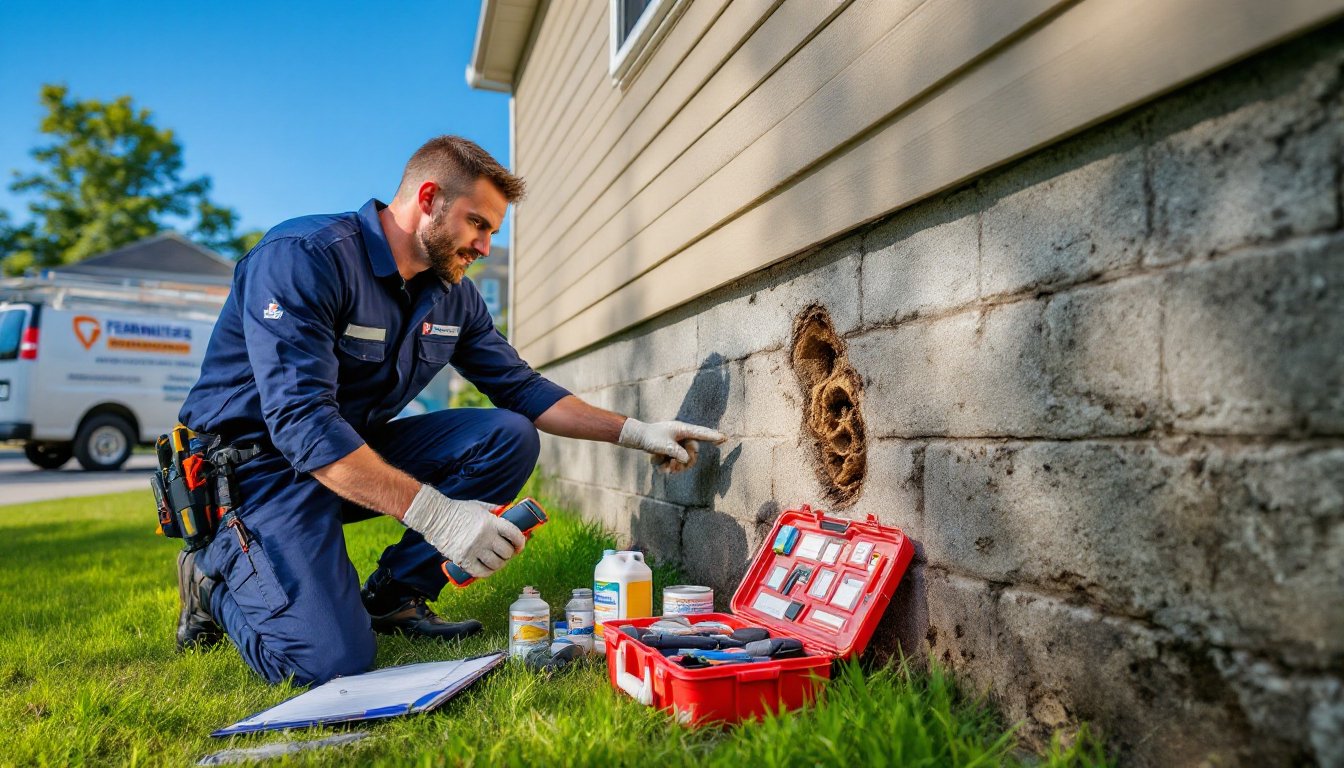
Spot treatment for a single infestation point (a garage wall, a bathroom subfloor) typically runs $200 to $600. Technicians drill access holes, inject termiticide, and seal the area. This works only if the colony hasn’t spread beyond the visible damage.
Liquid barrier treatments, the most common whole-home method, cost $1,200 to $2,500 for homes under 2,000 square feet. Crews trench around the foundation perimeter, inject termiticide into the soil, and sometimes drill through slabs or crawlspace walls. Coverage lasts five to ten years, depending on soil type and chemical formulation.
Fumigation (tenting) is the heavy artillery for drywood termite infestations, especially common in the Southwest and coastal regions. According to Angi’s 2026 data, fumigation averages $1,800 to $3,800 for a typical single-family home. The entire structure is sealed under tarps and filled with sulfuryl fluoride gas for 24 to 72 hours. It kills termites in all life stages but requires homeowners to vacate and remove plants, pets, and food.
Bait station systems (Sentricon, Trelona, Advance) cost $1,500 to $3,000 for installation, plus $300 to $500 annually for monitoring and bait replacement. Stations are placed every 10 to 15 feet around the home’s perimeter. Termites carry bait back to the colony, gradually eliminating it over months. It’s slower than liquid treatments but less invasive and ideal for homes with wells or sensitive landscaping.
Factors That Affect Termite Control Pricing
Infestation Severity and Home Size
A light infestation confined to one wall cavity costs far less than a colony that’s hollowed out floor joists, rim boards, and window framing across multiple rooms. Technicians assess severity during inspections using moisture meters, infrared cameras, and acoustic sensors. Widespread damage requires more chemical, more labor, and often exploratory demolition to access hidden colonies.
Home square footage directly impacts material and labor. Treating a 1,200-square-foot slab-on-grade home might require 150 gallons of diluted termiticide and four hours of labor. A 3,500-square-foot two-story with a basement could need 400 gallons and a two-person crew working a full day. Linear footage of foundation perimeter also matters, an L-shaped ranch has more perimeter per square foot than a rectangular colonial.
Multi-level homes and homes with crawlspaces add complexity. Crawlspace treatments require technicians to work in tight, often wet conditions, applying termiticide to piers, mudsills, and soil. Expect to pay 10% to 20% more for crawlspace access compared to slab foundations.
Treatment Type and Method
Liquid termiticides fall into two categories: repellent (pyrethroids like bifenthrin) and non-repellent (fipronil, imidacloprid). Non-repellents cost slightly more but work better because termites can’t detect the chemical and carry it back to the colony. Repellents create a barrier termites avoid, which can push them to find alternate entry points.
Borate treatments (TimBor, BoraCare) are applied directly to wood and cost $2 to $5 per linear foot of lumber treated. They’re best for new construction or during major remodels when framing is exposed. Borates penetrate wood and remain effective for decades, preventing both termites and wood-boring beetles. They won’t eliminate an active infestation but excel at prevention.
Fumigation pricing varies by home volume (cubic footage), not just floor area. Vaulted ceilings, attics, and attached garages all increase the total space to be fumigated. Homes in regions with drywood termites often need fumigation because these species nest entirely within wood, not soil, making liquid barriers ineffective.
DIY Termite Control vs. Professional Services
DIY termite control is legal in most states, but it’s rarely effective for active infestations. Homeowners can purchase liquid termiticides (Taurus SC, Talstar P) and bait stations (Spectracide, Terro) online, but application matters more than chemistry. Professionals use truck-mounted tank sprayers that deliver 50 to 100 PSI, forcing termiticide deep into soil and voids. A consumer pump sprayer tops out around 40 PSI and won’t achieve the same penetration.
DIY bait stations cost $50 to $150 for a dozen stakes and monitors. Installation is straightforward: dig a shallow hole every 10 feet around the foundation, insert the station, and check monthly. The catch? Termites have to find the bait before they find your house, and homeowners often place stations inconsistently or fail to monitor them. Professional bait systems include regular inspections and guaranteed bait replenishment.
For minor prevention, sealing foundation cracks, improving drainage, removing wood-to-soil contact, DIY makes sense. Use polyurethane or silicone caulk (not latex, which termites can chew through) to seal gaps around plumbing penetrations and sill plates. Redirect downspouts and grade soil away from the foundation to eliminate moisture that attracts termites. These steps won’t stop an existing colony but reduce future risk.
When to call a pro: If you see live termites, mud tubes wider than a pencil, or structural damage (sagging floors, cracked drywall, hollow-sounding wood), skip the DIY route. Misapplied termiticide can contaminate wells, kill beneficial insects, and give termites time to spread. Most states require pest control operator licenses for commercial-grade termiticide application, and many product labels restrict sale to certified applicators. Liability also matters, if your DIY treatment fails and termites damage a neighbor’s property, you could be on the hook.
Professionals carry general liability and treatment warranties, typically one to five years depending on method. If termites return during the warranty period, retreatment is free. That peace of mind is hard to DIY.
Annual Termite Inspection and Prevention Costs
Most lenders require a termite inspection (often called a Wood Destroying Insect report or WDI) before closing on a home purchase. These inspections cost $75 to $150 and cover accessible areas: foundation, crawlspace, attic, garage, and visible framing. Inspectors look for live termites, mud tubes, damaged wood, and conducive conditions (moisture intrusion, wood debris in crawlspaces, foam insulation in contact with soil).
Annual inspections aren’t legally required for existing homeowners in most jurisdictions, but they’re smart insurance in termite-prone regions (the Southeast, Southwest, and Pacific Coast). Many pest control companies bundle annual inspections with ongoing treatment plans, charging $100 to $300 per year for inspection, reporting, and spot treatments if needed.
Some companies offer termite bonds, service agreements that include annual inspections, retreatment if termites appear, and repair coverage up to a set dollar limit (often $250,000 to $1 million). Bonds cost $200 to $500 annually after initial treatment. Read the fine print: many bonds exclude damage from Formosan termites, drywood species, or termites that entered through untreated areas (like a deck addition built after the original treatment).
Preventive treatments for new construction run $0.40 to $1.20 per square foot and are applied during the pre-pour stage (before concrete slabs are poured) or after framing is complete. Builders in high-risk zones often include termite pre-treatment in the base price. If you’re building, specify non-repellent termiticides and confirm the contractor is licensed and insured.
For existing homes without active infestations, professional advice often focuses on moisture control and exclusion. Fix leaky gutters, replace water-damaged sill plates, and keep mulch and firewood at least 18 inches away from the foundation. These steps cost little but make homes far less attractive to scouting termites.
Conclusion
Termite control isn’t cheap, but neither is replacing floor joists or sistering rafters. Budget $1,200 to $2,500 for professional liquid treatments, $1,800 to $3,800 for fumigation, and $300 to $500 annually for bait monitoring. Get multiple bids, ask for proof of licensing and insurance, and confirm warranty terms in writing. Inspections matter, catching termites early keeps a $500 spot treatment from becoming a $10,000 structural repair.