
Table of Contents
ToggleSilverfish might sound like something from a fantasy novel, but they’re real pests that thrive in damp corners, bathrooms, and basements across the country. These wingless insects don’t bite or spread disease, but they’ll chew through books, wallpaper, clothing, and anything else containing starch or cellulose. If you’ve spotted a silver, wriggling critter darting across your bathroom floor at night, you’re dealing with an infestation that won’t resolve itself. The good news? Most homeowners can tackle silverfish without calling in a pro, using a combination of moisture control, targeted treatments, and smart prevention strategies.
Key Takeaways
- Silverfish pest control starts with moisture reduction—maintain humidity below 50% using exhaust fans and dehumidifiers to eliminate the damp conditions these insects require to survive.
- Use a combination of natural methods like diatomaceous earth and boric acid for light infestations, or residual insecticide sprays and dusts for moderate to heavy silverfish infestations.
- Seal foundation cracks, gaps around plumbing, and worn door sweeps to prevent silverfish entry, and replace cardboard storage boxes with sealed plastic bins to cut off food sources.
- Monitor activity with sticky traps placed along baseboards and under sinks to identify high-traffic areas before focusing treatment efforts on those hotspots.
- Professional pest control services ($150–$350 for initial treatment) are recommended for severe infestations spanning multiple rooms or areas you can’t easily treat yourself.
- Declutter storage spaces, vacuum regularly along baseboards and in closets, and conduct routine inspections every few months to catch new silverfish activity early and prevent reinfestation.
What Are Silverfish and Why Are They in Your Home?
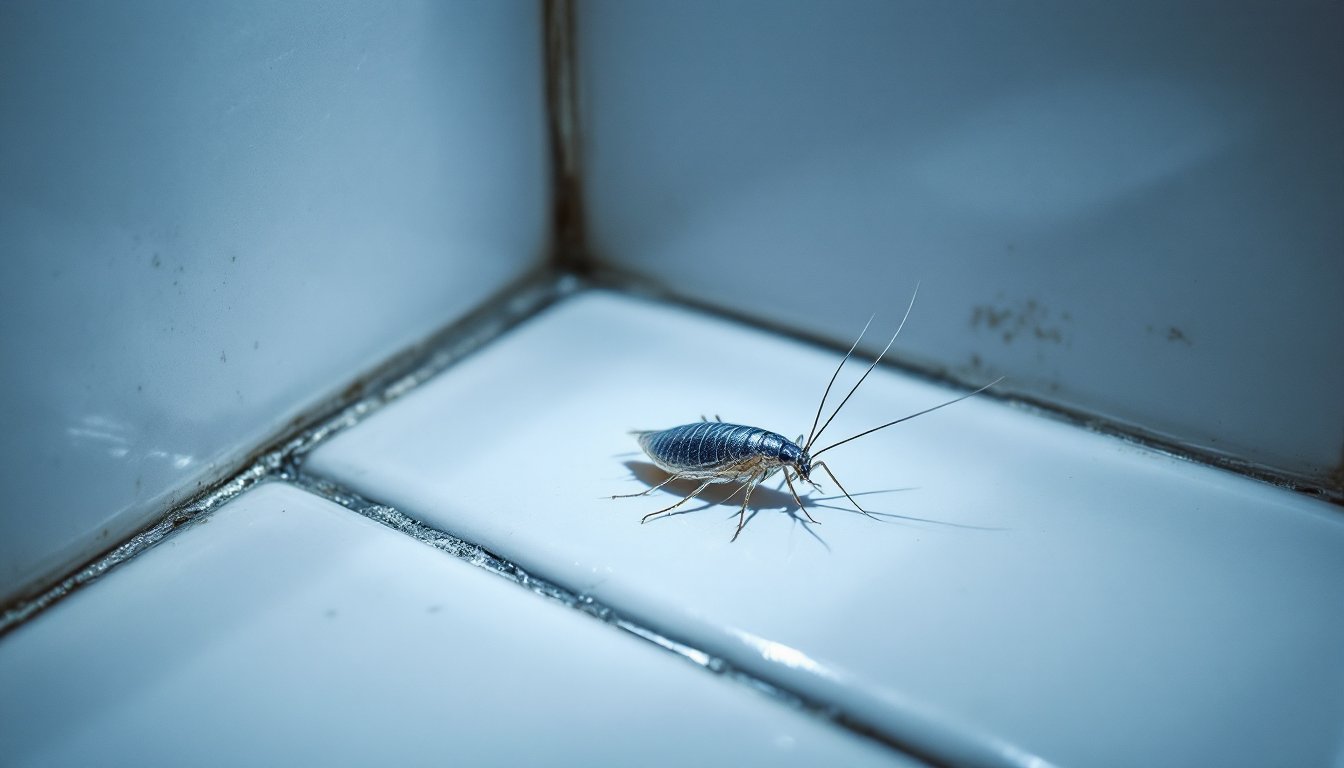
Silverfish (Lepisma saccharinum) are primitive insects that have been around for over 400 million years, and they look the part. Adults measure about ½ to ¾ inch long, with teardrop-shaped bodies covered in silvery-gray scales. Three long bristles extend from their rear end, and their rapid, fish-like movements give them their name.
They’re moisture seekers. Silverfish need high humidity (75–95%) to survive, which is why they congregate in bathrooms, laundry rooms, basements, and crawl spaces. They’re nocturnal, so most homeowners don’t realize they have a problem until they flip on a light and see one scurrying for cover.
Their diet is surprisingly broad: they feed on carbohydrates and proteins, including paper, glue, book bindings, starched fabrics, wallpaper paste, dead insects, and even some synthetic fibers. Cardboard boxes stored in damp basements are prime real estate. Unlike termites or carpenter ants, silverfish don’t cause structural damage, but they’ll ruin stored belongings, family photos, and valuable books if left unchecked.
They enter homes through foundation cracks, gaps around plumbing penetrations, door sweeps, and vents. Once inside, they reproduce slowly but steadily, females can lay two to twenty eggs at a time in hidden cracks and crevices. Without intervention, a small problem becomes a persistent one.
Signs of a Silverfish Infestation
Silverfish are sneaky. You might not see them for months, but the evidence piles up:
• Live sightings at night. Turn on a bathroom or basement light suddenly, and you’ll catch them in the open before they dart under baseboards or into cracks.
• Yellow stains or scales. Silverfish molt throughout their lives, leaving behind tiny, translucent shed skins and yellowish dust on surfaces.
• Small, irregular holes in paper or fabric. Unlike mice, which tear, silverfish scrape surface material, leaving shallow, jagged damage.
• Fecal pellets. These look like tiny black peppercorns and accumulate near feeding sites, check the edges of bookshelves, closet corners, and behind stored boxes.
Common hotspots include attics with poor ventilation, bathrooms without exhaust fans, and unfinished basements where condensation collects on concrete walls. Check around water heaters, under sinks, and inside cardboard storage boxes. If you’re storing books, old magazines, or textiles in these areas, inspect them closely for damage.
Silverfish populations grow slowly, so if you’re seeing multiple insects daily, the infestation has been building for months. Address it now before they spread to other areas of the house.
Natural DIY Methods to Get Rid of Silverfish
Before reaching for chemicals, try these low-toxicity approaches. They work best for light to moderate infestations.
Diatomaceous earth (DE) is a non-toxic powder made from fossilized algae. When silverfish crawl through it, the microscopic sharp edges damage their exoskeletons, causing dehydration and death. Use food-grade DE and apply a light dusting along baseboards, behind appliances, in closet corners, and around plumbing penetrations. Wear a dust mask during application, DE is safe when settled, but you don’t want to inhale the fine particles. Reapply after vacuuming or if it gets wet.
Sticky traps won’t eliminate an infestation on their own, but they’re excellent for monitoring activity. Place them under sinks, along baseboards in bathrooms, and near suspected entry points. Check them weekly and note which areas show the most captures, that tells you where to focus treatment efforts.
Boric acid is a classic low-toxicity insecticide. Apply it as a fine dust in wall voids, under baseboards, and in crawl spaces. Silverfish ingest it while grooming, and it disrupts their digestive systems. Keep it away from areas accessible to pets and children, and avoid heavy application, less is more with boric acid. A hand duster (like those used for applying garden dust) gives better control than trying to sprinkle it from a container.
Cedar shavings or essential oils (cedar, lavender, citrus) act as mild repellents. Place sachets in closets, drawers, and storage bins. They won’t kill silverfish, but they may discourage them from settling in those areas. Don’t rely on these alone, combine them with moisture control and other treatments for effective pest management strategies.
Homemade traps can supplement other methods. Wrap a glass jar in masking tape (for grip), place a small piece of bread or oatmeal inside, and leave it overnight in an infested area. Silverfish climb up the tape but can’t escape the smooth glass interior. Dispose of trapped insects in the morning.
Chemical Treatments and Store-Bought Solutions
For moderate to heavy infestations, chemical treatments deliver faster, more reliable results. Always follow label instructions and wear appropriate PPE.
Residual insecticide sprays containing pyrethroids (like bifenthrin, deltamethrin, or lambda-cyhalothrin) are highly effective. Spray along baseboards, behind appliances, in cracks and crevices, and around plumbing entry points. These create a barrier that kills silverfish on contact and continues working for weeks. Focus on areas where you’ve seen activity or found fecal pellets. Allow treated surfaces to dry completely before allowing pets or children near them.
Insecticidal dusts (like CimeXa or Delta Dust) last longer than sprays, up to ten years in dry, undisturbed areas. Apply them inside wall voids, under bathtubs (via access panels), and in crawl spaces. Use a hand duster to puff a light coating into cracks around pipes and electrical boxes. Dusts work especially well in areas prone to moisture where sprays might break down faster.
Aerosol crack-and-crevice treatments are ideal for targeting specific hiding spots. Products with a straw applicator let you inject insecticide deep into wall cracks, behind outlet covers (with power off), and under baseboards. Pair these with broader residual sprays for comprehensive coverage.
Most hardware stores carry products labeled for silverfish control. The Spruce provides detailed reviews of various home pest control products. Read labels carefully, some formulations are for outdoor use only, while others are safe for indoor application in occupied spaces.
For severe infestations spanning multiple rooms or levels, consider a licensed pest control operator. They have access to professional-grade products and can treat wall voids and structural areas that DIYers can’t easily reach. Expect to pay $150–$350 for an initial treatment, depending on your region and the size of your home.
How to Prevent Silverfish From Returning
Killing existing silverfish is only half the job. Without prevention, they’ll be back within months.
Reduce Moisture and Humidity Levels
Silverfish can’t survive in dry environments. Install or upgrade bathroom and kitchen exhaust fans to Code (check IRC M1507 for minimum CFM requirements based on room size). Run them during and for 15–20 minutes after showers or cooking. In basements and crawl spaces, use a dehumidifier to keep relative humidity below 50%. Empty the reservoir regularly or set up a condensate pump for continuous drainage.
Fix plumbing leaks immediately, even minor drips under sinks or around toilet bases create the conditions silverfish need. Check washing machine hoses, water heater connections, and supply lines annually. Insulate cold water pipes to prevent condensation, especially in humid climates.
Improve ventilation in storage areas. Don’t pack boxes tightly against exterior walls in basements: leave a 2–3 inch gap for air circulation. In attics, ensure soffit and ridge vents are unblocked. Proper airflow prevents the damp, stagnant conditions silverfish prefer, as noted in guidance from Good Housekeeping.
Seal Entry Points and Declutter Your Space
Conduct a perimeter inspection. Seal foundation cracks and gaps around utility penetrations with polyurethane caulk or hydraulic cement (for wider cracks). Install or replace worn door sweeps on exterior doors, especially basement and garage entries. Use copper mesh or stainless steel wool to plug gaps around plumbing where it enters the home, silverfish can’t chew through metal.
Inspect window wells and basement windows. Make sure drainage is clear and screens are intact. Repair torn window screens (use 18×14 mesh or finer) to keep insects out.
Declutter storage areas ruthlessly. Replace cardboard boxes with plastic bins with tight-fitting lids, silverfish can’t penetrate sealed plastic, and it eliminates a major food source. Store books, papers, and textiles in dry, well-ventilated areas. Don’t keep old magazines, newspapers, or paperwork you don’t need: recycle or shred them.
Vacuum regularly, especially along baseboards, in closets, and under furniture. This removes food debris, shed scales, and eggs before they hatch. Empty the vacuum canister or bag outside immediately after use.
Routine inspections every few months help catch new activity early. Check those sticky traps, look for fresh fecal pellets, and stay vigilant in high-risk areas. Combining these prevention steps with seasonal pest strategies and proven control tactics keeps silverfish, and other moisture-loving pests, out for good.
For broader pest prevention techniques applicable to various household invaders, consider exploring do-it-yourself approaches that address multiple species. And remember, prevention is an ongoing process, not a one-time fix. Stay consistent, and your home stays pest-free.