
Table of Contents
ToggleBrown recluse spiders aren’t the type of houseguest you invite twice, or even once. These venomous arachnids can lurk in basements, attics, and closets, occasionally delivering bites that result in painful necrotic wounds. Unlike other common household spiders that eat bugs and keep to themselves, brown recluses require serious attention. Homeowners dealing with an infestation face a dual challenge: identifying a spider that’s notoriously reclusive and implementing control methods that actually work. This guide walks through recognition, prevention, and elimination strategies to help reclaim living spaces safely.
Key Takeaways
- Brown recluse pest control starts with proper identification using the distinctive violin-shaped marking and six-eye arrangement, as many brown spiders are mistakenly identified as true brown recluses.
- Prevent infestations by eliminating clutter, switching from cardboard to sealed plastic storage bins, and sealing foundation cracks and entry points where brown recluses hitchhike into homes via boxes and firewood.
- Brown recluse venom causes necrotic tissue damage in only about 10% of bites, but if bitten, clean with soap and water, apply ice, and seek medical attention immediately.
- For active infestations, use residual insecticides containing bifenthrin or cyfluthrin on baseboards and cracks, or deploy sticky traps to monitor activity and identify problem hotspots.
- Professional pest control services are essential if you’re finding multiple brown recluses weekly in living areas, as they offer proper species identification, professional-grade products, and follow-up treatments over several months.
Identifying Brown Recluse Spiders in Your Home
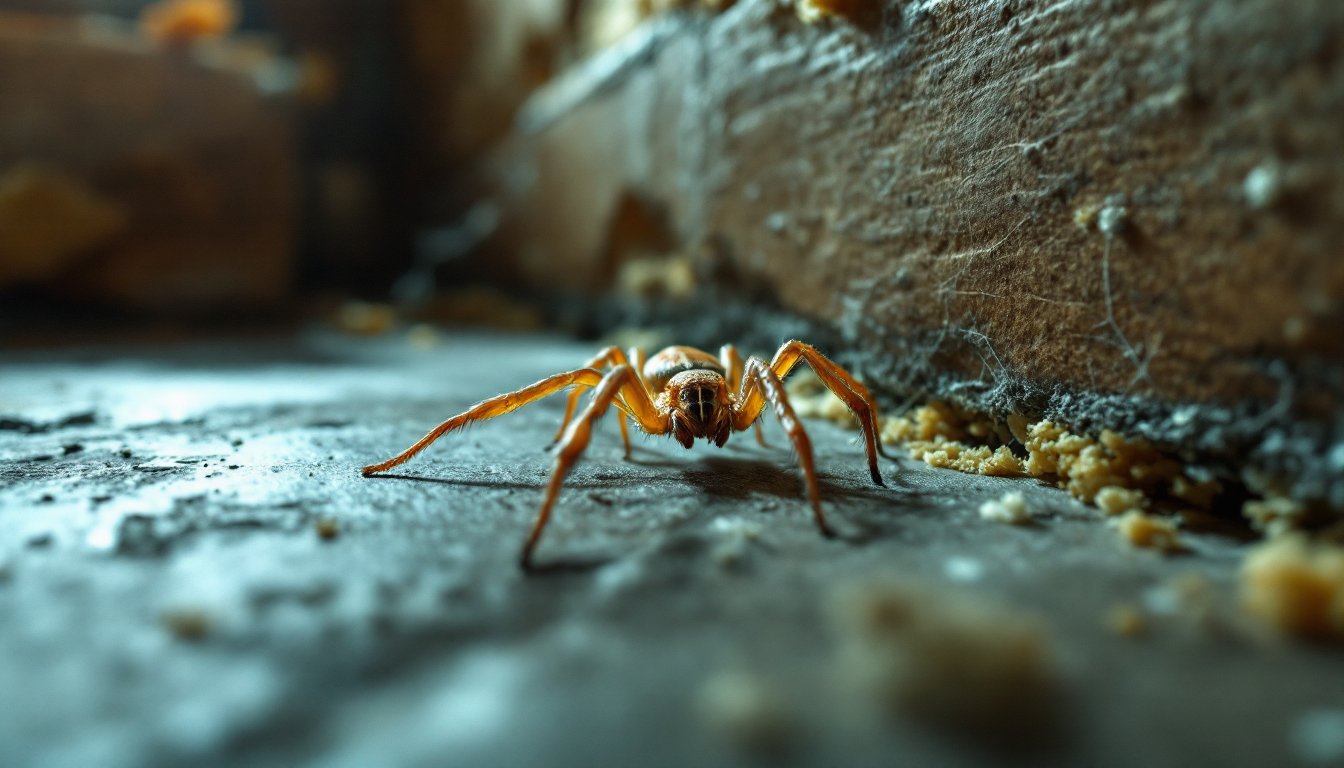
Brown recluse spiders (Loxosceles reclusa) measure about 1/4 to 1/2 inch in body length, with legs extending their overall size to roughly the diameter of a quarter. The key identifier is the dark violin-shaped marking on the cephalothorax (the section where legs attach), with the neck of the violin pointing toward the abdomen.
But here’s the catch: many brown spiders get misidentified as brown recluses. True brown recluses have six eyes arranged in three pairs, not the typical eight eyes found on most spiders. You’ll need a magnifying glass or macro lens to confirm this feature, but it’s definitive.
These spiders prefer dark, undisturbed areas. Common hiding spots include:
- Cardboard boxes stored in basements or garages
- Behind baseboards and wall voids
- Inside shoes, clothing piles, or linens left undisturbed
- Attics with minimal foot traffic
- Crawl spaces and utility areas
Brown recluses build irregular, sticky webs, not the organized orb webs you see in gardens. The webs serve as retreats rather than traps. If you’re finding spiders in living areas during daylight, they’re likely displaced from their preferred hiding spots, which can indicate a larger population nearby.
Why Brown Recluse Spiders Are Dangerous
The brown recluse bite contains a cytotoxic venom that destroys tissue cells and blood vessels. Most bites occur when someone unknowingly presses against a spider, putting on a stored jacket, reaching into a box, or rolling over in bed.
Initial bites often go unnoticed. Within 2 to 8 hours, victims may experience redness, swelling, and a blister at the bite site. In severe cases, the venom causes necrosis (tissue death), leaving an open, slow-healing wound that can take weeks or months to close. Systemic reactions, though rare, include fever, chills, nausea, and in extreme cases, organ damage.
Not every brown recluse bite results in necrosis. Studies suggest only about 10% of bites develop significant tissue damage. Factors include the amount of venom injected, individual immune response, and bite location. Children, elderly individuals, and those with compromised immune systems face higher risks of complications.
If bitten, clean the area with soap and water, apply ice to reduce swelling, and seek medical attention. Do not apply heat, cut the wound, or use a tourniquet. Capture the spider if possible (even a crushed specimen helps with identification), but don’t delay treatment to hunt for it.
How Brown Recluse Spiders Enter Your Home
Brown recluses don’t typically march through the front door. They hitchhike. Cardboard boxes from storage facilities or warehouses are prime vectors, spiders hide in the corrugated layers and get transported directly into homes.
Other common entry methods include:
- Firewood stacks: Spiders nest in bark crevices and migrate indoors when wood is carried in
- Foundation cracks and gaps: Openings around utility penetrations (pipes, cables, vents) provide easy access
- Attached garages and sheds: These spaces serve as staging areas before spiders move into main living quarters
- Used furniture: Secondhand upholstered items and wooden pieces can harbor hidden populations
Brown recluses thrive in the central and southern United States, with heavy concentrations in states like Kansas, Missouri, Arkansas, Oklahoma, and Texas. They’re poor climbers on smooth surfaces, so homes with pier-and-beam foundations or crawl spaces see more activity than slab foundations.
Once inside, they reproduce quickly. A single female lays 40 to 50 eggs per egg sac and can produce multiple sacs per year. Spiderlings mature in about a year, and adults live 2 to 4 years, meaning a small problem can escalate if left unchecked.
DIY Brown Recluse Prevention Strategies
Prevention beats extermination every time. Start by eliminating clutter, brown recluses love undisturbed storage areas. Cardboard boxes are spider magnets: switch to sealed plastic storage bins with tight-fitting lids for long-term storage in basements, attics, and garages.
Seal entry points around the home’s exterior:
- Inspect and caulk foundation cracks using polyurethane or silicone caulk rated for exterior use
- Install door sweeps on exterior doors, ensuring a tight seal against thresholds
- Screen vents and openings in crawl spaces, attics, and around HVAC penetrations with 1/4-inch mesh hardware cloth
- Weatherstrip windows and repair damaged screens (18×16 mesh or finer)
Reduce outdoor harborage near the foundation. Brown recluses nest in woodpiles, leaf litter, and debris. Store firewood at least 20 feet from the house and elevate it off the ground. Trim vegetation away from siding and remove rock piles or unused building materials.
Inside, shake out clothing and shoes before wearing them, especially items stored in closets or laundry piles. Use sticky traps along baseboards, in corners, and under furniture to monitor spider activity. These traps won’t eliminate an infestation but help gauge population size and identify problem areas.
Consider using professional pest control services for thorough inspections, especially if you’re moving into a home with a history of brown recluse issues. Homeowners attempting do-it-yourself methods should focus on exclusion and habitat modification before resorting to pesticides.
Effective Treatment Methods for Brown Recluse Infestations
Active infestations require targeted treatment. Residual insecticides applied to baseboards, cracks, and crevices provide the most effective control. Look for products containing bifenthrin, cyfluthrin, or deltamethrin, synthetic pyrethroids that remain active for several weeks.
Application tips:
- Wear PPE: Gloves, safety glasses, and a respirator mask when applying pesticides in enclosed spaces
- Focus on harborage areas: Spray behind appliances, inside closets, along wall-floor junctions, and in storage areas
- Use crack-and-crevice treatments: A pin-stream nozzle directs pesticide into gaps where spiders hide
- Avoid broad broadcast spraying: Targeted application is safer and more effective than coating entire surfaces
Dust formulations (like CimeXa or Tempo Dust) work well in wall voids, attics, and crawl spaces. Apply dust using a hand duster, depositing a light film in areas inaccessible to liquid sprays. Dust remains effective longer than liquids but requires careful application, too much product causes spiders to avoid treated areas.
Sticky traps serve double duty: monitoring and capture. Place traps along walls, under beds, and in closets. Check them weekly and replace as they fill. Heavy trap catches indicate you’ve found a hotspot.
Avoid bug bombs and total-release foggers. These products don’t penetrate the cracks and voids where brown recluses hide, and they leave residue on surfaces where people and pets come into contact. They’re also a waste of money for targeted pest control.
For persistent infestations, many homeowners find success with guidance from pest control specialists who can identify nesting sites and recommend appropriate treatments. Some integrated approaches combine chemical and non-chemical methods for better long-term results.
When to Call a Professional Exterminator
Some situations demand professional help. If you’re finding multiple brown recluses weekly, or if they’re appearing in bedrooms and living areas (not just storage spaces), the infestation likely exceeds what DIY methods can handle.
Professional exterminators bring advantages homeowners can’t replicate:
- Proper identification: Many spiders get mistaken for brown recluses. Pros confirm species before treatment
- Access to professional-grade products: Restricted-use pesticides and application equipment not available to consumers
- Structural inspection expertise: Identifying hidden entry points and nesting areas requires trained eyes
- Follow-up treatments: Brown recluse control often requires quarterly applications over 6 to 12 months
Expect to pay $200 to $500 for an initial treatment, with quarterly follow-ups running $75 to $150 per visit. Costs vary by region, home size, and infestation severity. A thorough treatment plan includes interior and exterior applications, plus habitat modification recommendations.
Before hiring, verify the company holds proper state licensing and insurance. Ask about their brown recluse experience specifically, general pest control differs from targeted arachnid management. Request a written treatment plan outlining products used, application sites, and safety precautions.
If someone in the household has been bitten, or if young children or elderly residents are present, professional treatment isn’t optional, it’s necessary risk management. Services like those offered through established providers typically include warranties and follow-up inspections. Local options, such as regional specialists, often provide more personalized service and faster response times.
For organizing your home to reduce hiding spots and maintain a clutter-free environment, simple storage solutions can complement your pest control efforts by eliminating the undisturbed spaces brown recluses prefer.
Conclusion
Brown recluse control demands vigilance, not panic. Proper identification prevents wasted effort on harmless spiders, while targeted prevention, sealing entries, reducing clutter, and eliminating harborage, stops problems before they start. DIY treatments work for light activity, but established infestations require professional intervention. The goal isn’t a spider-free home (impossible and unnecessary), but keeping venomous species out of living spaces where contact occurs. Stay proactive, and brown recluses will remain what they prefer to be: unseen and uninvolved.